The message from founders usually sounds the same. People sign up, they use it, some of them even say they love it, and almost nobody pays. Then comes the question: should we lower the price?
Before I answer, I go through the product the way a stranger would. I install it, answer the questions, wait for the plan, and reach the moment that decides everything: the price.
And very often I can't find it.
There's a trial offer, a countdown, a friendly line about how little it costs per day. What's missing is the one sentence a person needs before they decide anything: how much, for how long, and when the money leaves their account.
Pricing is where founders get shy
I've noticed that founders who are bold everywhere else become strangely careful at the price. They'll ship a feature in a weekend and argue with me about positioning for an hour, but when it comes to the number they hide it, soften it, or offer so many versions of it that nobody can choose.
I understand where it comes from. The price is the first moment the product asks for something real, and nobody wants to be rejected at that exact spot. So the instinct is to make the ask smaller, quieter, more negotiable.
The result is the opposite of what they want. Hesitation doesn't come from a price being high. It comes from a price being unclear. A person who can't see what they're agreeing to doesn't feel invited. They feel managed, and they leave to think about it, which almost always means they leave.
Mistake one: the price you can't see
The most common version is a paywall built around everything except the number. A trial in big letters, the price in small grey type, or only a comparison to something cheap you buy every day.
That comparison feels clever from the inside. From the outside, it reads as a sign that the real number is something you'd rather not say. Apple also requires subscription apps to show the full price and the billing period clearly, so this is not only a conversion question.
When I flag this, the fix is almost always the same and almost always boring. Put the total price and the billing period on the screen, at the size of everything else. Let the trial be the reason to start, not the thing that hides the cost.
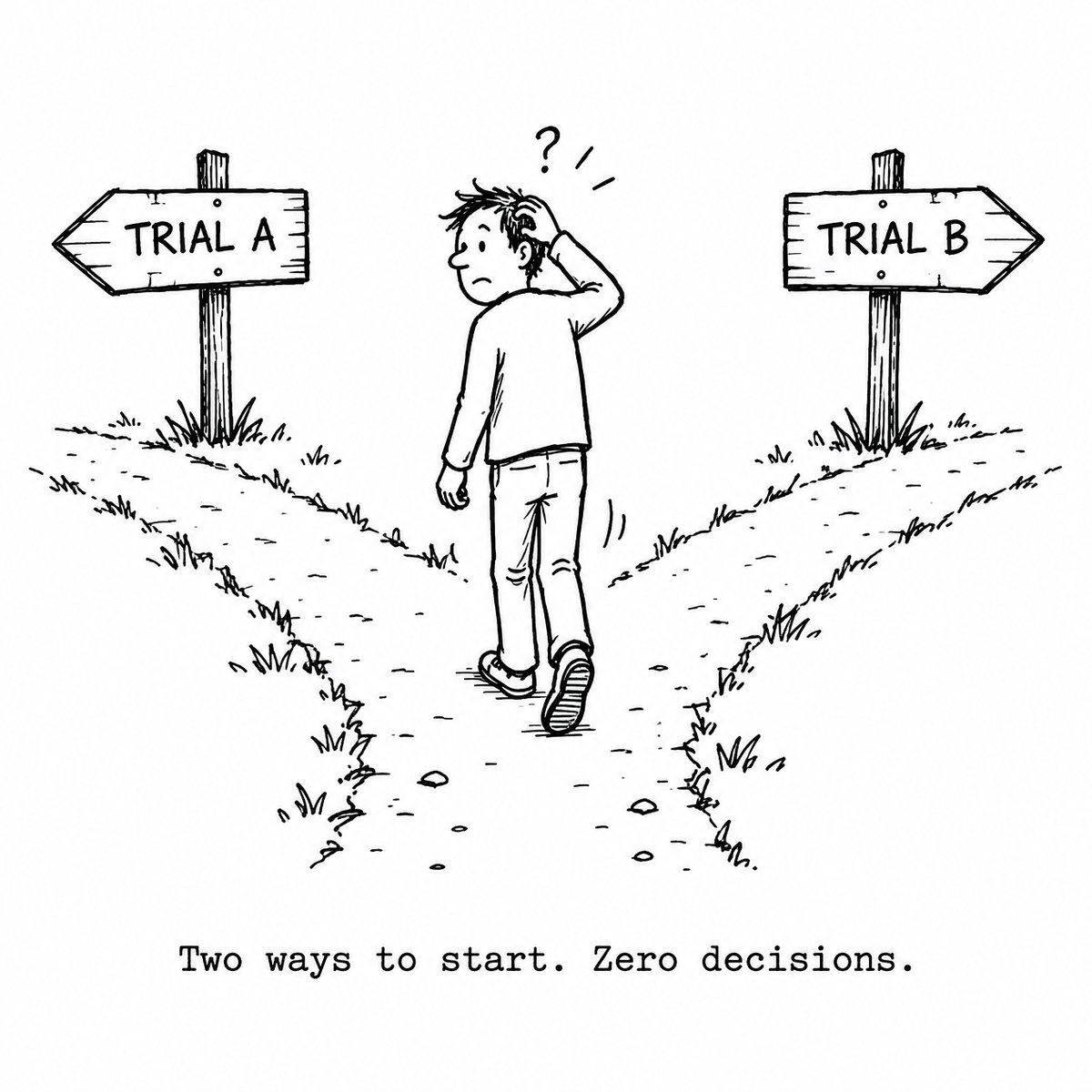
Mistake two: too many ways to start
The second version looks generous. Two trial options side by side, say a longer trial and a few free days with a different catch, or three plans with small differences between them.
The founder sees choice. The person on the screen sees homework. They now have to work out which option is the trick, and that question arrives at exactly the moment you need their attention on the product instead.
My suggestion is usually to cut it down to one way to start, with the price shown clearly, and to test plan lengths separately instead of stacking them on one screen. If the only plan on sale is yearly, try a six-month option with a clear reason to pick it. That's a real experiment. Two competing trials on the same screen is just friction.
Mistake three: free as a way to avoid the question
The third mistake is the one I made myself.
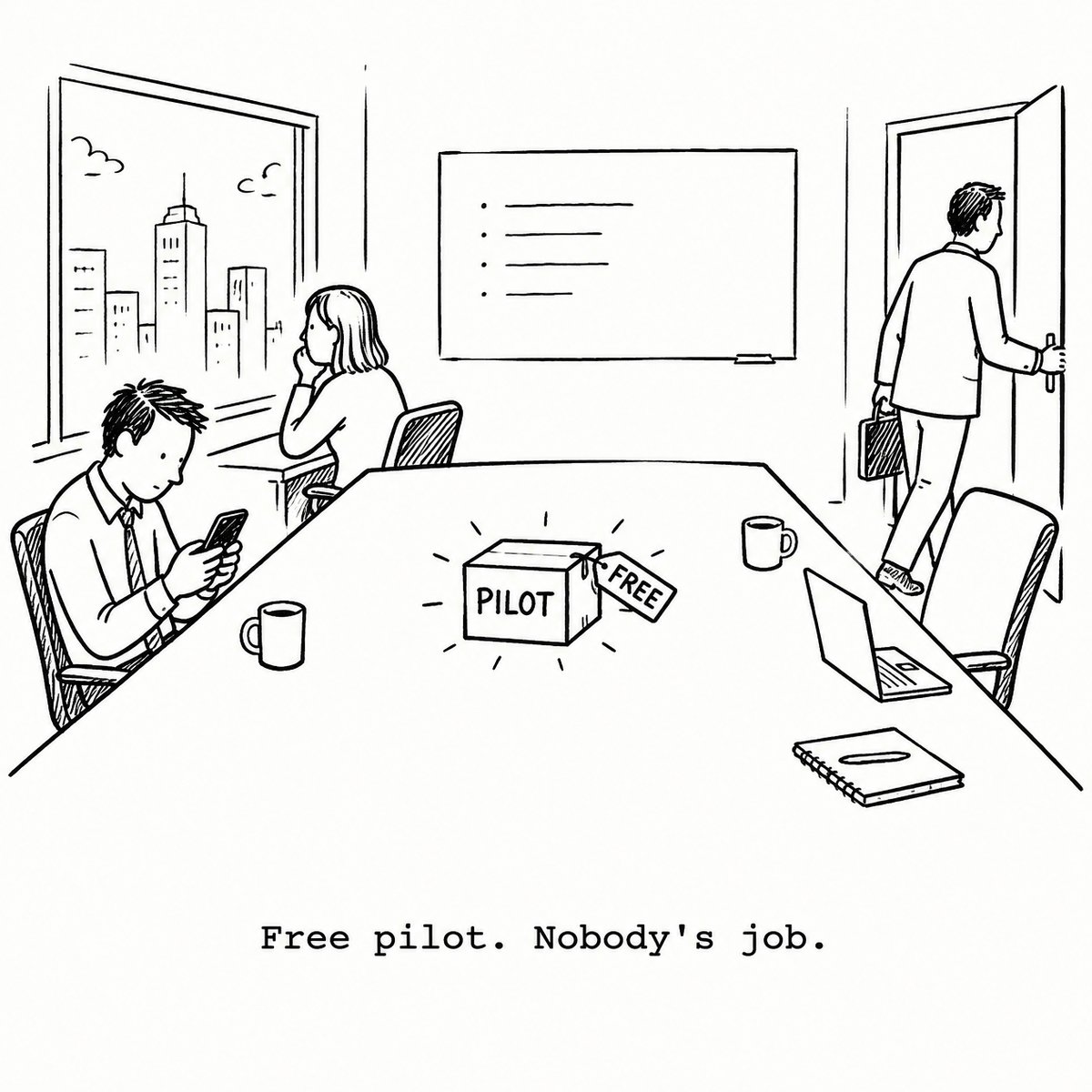
In my first company we sold into delivery businesses, and our pilots were free. It felt like the obvious way to lower the barrier. Getting the pilot was hard enough, and asking for money on top of that felt like it would kill the conversation.
It didn't kill the conversation. It made the conversation cheap. When a pilot costs nothing, the client has nothing at stake, and nobody inside the company is responsible for making it work. We lost a pilot we had spent a year winning, and while the main reason was that end users never activated, I've wondered ever since whether a paid pilot would have made the client put real people and real effort behind it.
I still don't know the answer for certain. What I know is that "free" was not a pricing decision. It was a way of not making one.
The turn: price is part of the product
Here's what connects all three. Founders treat pricing as something attached to the product at the end, a gate between the value and the user. So they try to make the gate as invisible as possible.
But price is part of what the person is buying. A clear price says the product knows what it's worth. A single clear way to start says someone has already thought about what's right for you. A paid pilot says both sides intend to make this work. Every one of those is a signal about the product, and every softened, hidden or free version sends the opposite signal.
This is also why the same hesitation shows up in B2C paywalls and in B2B pilots. In both cases, the person isn't only deciding whether the price is acceptable. They're deciding whether you're serious.
The one thing I'd do this week
Open your own paywall, or your pilot proposal, and read it as someone who has never met you. Then answer three questions in one sentence each. What exactly am I paying? How often? When does it start?
If you can't answer any of them from the screen alone, fix that before you test anything else. Don't change the number yet. Make the number visible, make the way to start single, and make the commitment real. Only then will your pricing experiments tell you something about the price rather than about the confusion around it.
When founders do this, the first reaction is usually discomfort, because the price suddenly looks very exposed. That discomfort is useful. It's the same thing your users have been feeling, except they felt it alone and left.
Where I'm still unsure
The paid pilot question is the one I'd most like to be argued with on. I can see how charging could make a client commit, and I can also see how it could end the deal before anyone sees the product work.
If you've run pilots both ways, tell me what happened.
And if you have a paywall in front of you right now, tell me one thing: can a stranger read the full price and the billing period in five seconds?