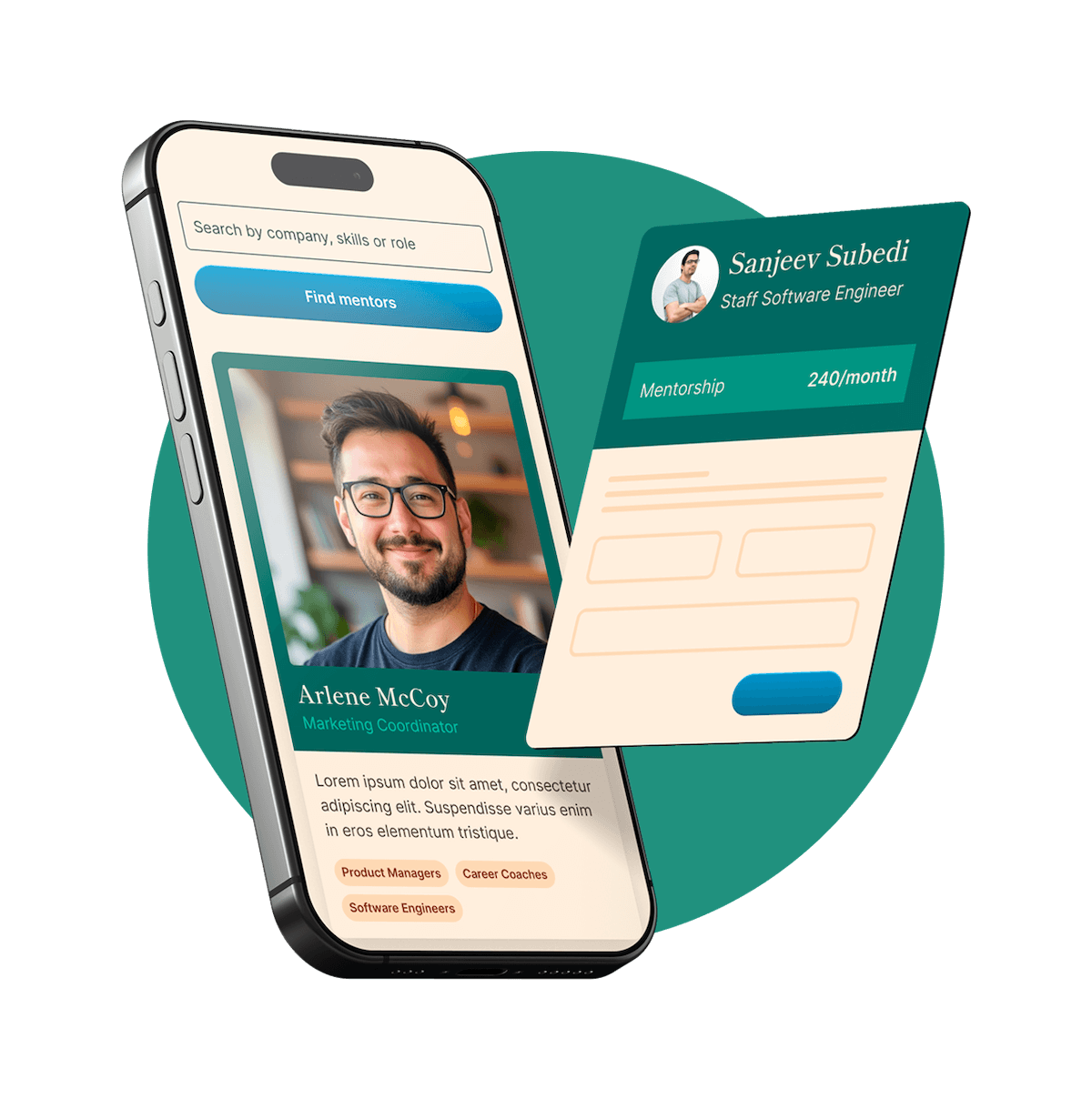
If you're not sure what to learn in the first place, that's not a course problem, and adding a mentor usually does more than either platform alone. Both have free tiers worth testing first. Below: a side-by-side comparison, honest pricing, and how to decide based on your actual goal.
I've watched thousands of professionals work through this exact decision through MentorCruise. Some thrive on Coursera's academic rigor. Others love Udemy's flexibility. But here's what I've noticed: the platform matters less than what you do after the course ends.
Both platforms have legitimate strengths. Coursera partners with Stanford, MIT, Google, and IBM to deliver university-level content with recognized certificates. Udemy hosts a marketplace of roughly 250,000 courses from practitioners who teach what they actually do. So "Coursera vs Udemy" comes down to which one fits your specific situation, not which one wins on paper.
But there's a third option most comparisons skip: combining either platform with a mentor who helps you apply what you learn. Courses teach content. Mentors teach you. That distinction matters more than most people realize.
Coursera vs Udemy at a glance
Here's the side-by-side. Prices are as of June 2026; check current rates on each platform before you buy, since both run frequent promotions.
| Coursera | Udemy | MentorCruise | |
|---|---|---|---|
| Catalog size | ~7,000+ courses included in Coursera Plus; thousands more available individually | ~250,000 courses across the marketplace | 6,700+ vetted mentors across tech, design, and business |
| Individual course price | $49 to $79 per course (more with graded assignments) | List $9.99 to $199.99; routinely on sale to roughly $10 to $20 | n/a (subscription model) |
| Subscription | Coursera Plus: $59/month or $399/year (about $33/mo) | Personal Plan: about $32/month or $156 to $168/year, roughly 26,000 to 28,000 curated courses | Monthly subscription per mentor, across Lite, Standard, and Pro tiers |
| Free trial | 7-day trial on Coursera Plus | 7-day trial on Personal Plan | 7-day free trial, money-back guarantee, cancel or switch anytime |
| What you keep | Access while subscribed (or per-course if bought individually) | Lifetime access to any course you buy outright | Ongoing relationship for as long as you subscribe |
| Best for | Recognized credentials, structured programs, university pathways | Cheap, practical, self-paced skills | Knowing what to learn, accountability, applying knowledge to a real goal |
| Certificates | Professional Certificates (Google, IBM, Microsoft) carry real weight in tech | Completion certificates; little hiring signal | n/a |
If you already know exactly what you need to learn, pick the platform that fits your budget and learning style. If you don't, that's the gap a mentor fills. More on each row below.
Why the platform decision matters less than you think
The real gap in online learning isn't course quality. It's what happens after you finish. Both Coursera and Udemy struggle with the same fundamental problem: courses end, and you're left alone to figure out next steps.
The certificate recognition problem
Employers recognize some online certificates and ignore others, and the difference is the issuer. In tech, Professional Certificates from Google's IT Support or IBM's Data Science programs carry weight. In other industries, certificates matter less than demonstrated skills. Udemy certificates vary wildly, since anyone can create a course.
Some mentees spend thousands on certificates that go nowhere. Others land roles with no certificates at all. The pattern I've noticed after running thousands of mentorships: what matters is whether you can do the work, not whether you have paper proving you took a course.
Understanding the core differences
Coursera and Udemy operate on fundamentally different business models, and those differences shape your experience.
Coursera partners with universities and companies (Stanford, Google, Microsoft) who design and deliver courses. You get vetted curriculum. The trade-off is rigidity: structured timelines, deadlines, and a set pace. If you're weighing Coursera against another academic platform, our edX vs Coursera comparison covers that matchup in detail.
Udemy is a marketplace where anyone can publish. This creates massive variety, around 250,000 courses, but wildly inconsistent quality. The flip side of that scale is breadth: if a niche skill exists, someone on Udemy probably teaches it, which is harder to find inside Coursera's smaller, curated catalog.
Matching your career goals to the right platform
Your career goals should drive your platform choice, not the other way around.
Choose Coursera when you need recognized credentials, structured deadlines, or academic pathways (degrees through university partnerships).
Choose Udemy when you need practical skills quickly, budget is tight (sales bring courses to $10 to $20), and you're self-motivated without needing external accountability.
Coursera vs Udemy by subject
The right platform often depends on what you're actually learning:
- For learning to code and programming fundamentals, Coursera's vetted curriculum (like Google's and Meta's certificate programs) keeps quality consistent, which matters most when you're a beginner who can't yet tell good instruction from bad. Udemy has excellent coding courses too, but quality ranges from great to unwatchable, so lean on reviews and instructor track record.
- For data science, AI, and machine learning, Coursera's university and company partnerships run deep, including specializations from DeepLearning.AI and major universities. It's a strong fit if you want structured depth and a credential.
- For cybersecurity and IT support, Coursera's Google and IBM certificate programs are built with employer input and aimed at entry-level roles.
- For specific tools, software, and one-off skills, Udemy wins on breadth and price. Need a focused course on a particular framework, design tool, or spreadsheet skill? You'll usually find a cheap, practical one on Udemy faster than on Coursera.
If you're genuinely unsure which subject to invest in, that's the signal to talk to someone who's done the job. A software engineering mentor or data science mentor can tell you in one conversation whether Python or SQL matters more for the path you want, before you spend a dollar on either platform.
The course completion problem
The uncomfortable truth both platforms would rather not advertise: completion rates for online courses are terrible. A systematic review of 221 MOOCs found a median completion rate of just 12.6%, with rates ranging from 0.7% to 52.1%.
Not because people are lazy. It's because courses don't provide accountability, feedback, or personalized guidance. You're learning alone, with no one to notice if you drop off.
The mentors in my own learning experience were the most valuable part, and they vanished when I needed them most. That gap is why MentorCruise exists. If a 12.6% completion rate sounds like your own history with online courses, accountability is the missing piece, and it's exactly what working with a mentor adds that a video library can't.
What to expect from each learning approach
Coursera's structured courses mirror traditional education: fixed schedules, peer cohorts, and graded assignments that build accountability. Udemy offers self-paced flexibility where you control the timeline entirely.
Self-paced learning vs structured guidance
Udemy is purely self-paced. You buy a course. You work through it whenever you want. No external structure pushes you forward. For most people, the flexibility becomes a trap. Lifetime access sounds great until that course sits at 15% complete for two years.
Coursera's structure (cohort start dates, weekly deadlines, graded assignments) helps completion rates but reduces flexibility.
People are far more likely to follow through when they're accountable to someone, and more so when they schedule specific check-ins. Instructor-led learning, where someone is watching your progress, tends to produce better outcomes than purely self-paced study for the same reason. Neither Coursera nor Udemy provides that mechanism. Both leave you learning content designed for the average student, not for you.
Adding mentorship to your learning stack
Combining online courses with personalized mentorship produces better results than either approach alone.
Use Coursera or Udemy to build foundational knowledge. That's what they're good at. Then work with a mentor who knows your background, goals, and challenges to help you apply that knowledge.
A mentor can tell you which courses are actually worth your time. They can help you skip content you already know and focus on gaps. Decades of research on expertise point the same way: real skill builds through focused practice with immediate feedback, not passive consumption. Most importantly, mentors connect what you're learning to actual job outcomes.
You can message your MentorCruise mentor asynchronously. We added this after hearing that scheduling was a barrier. Some mentor relationships happen entirely over text: quick questions answered in context, feedback on work-in-progress, accountability check-ins that don't require a calendar invite.
Why mentorship drives better outcomes
Successful career transitions follow a pattern: internal clarity (what do I want?), skill mapping (what gaps exist?), then external action (networking, applications). Research on workplace coaching points to better self-regulation and goal progress when people work with someone, not alone. Most people start with the action step and wonder why they're stuck. If tech is your target, our no-nonsense guide to breaking into tech walks through that sequence for career changers.
Courses can fill skill gaps once you've identified them. But they can't help you figure out which skills actually matter for your goals. Python or SQL? Courses won't tell you which serves your career path better. And they can't help you handle office politics or negotiate salary.
That's where mentors come in. I've seen mentees achieve in months what would have taken years of solo trial and error. Not because the mentor had magic answers, but because they had context. They knew the mentee's background, understood their constraints, and could give guidance tailored to the actual situation.
How to choose based on your learning goals
Choosing between Coursera and Udemy requires honest self-assessment about what you're trying to achieve and how you learn best.
Comparing platform quality and course standards
Coursera maintains quality through institutional partnerships: curriculum vetted by academics with credentialed instructors.
Udemy's quality varies dramatically. Anyone can publish. Reviews help, but a 4.5-star course might have reviews from beginners who didn't know what good instruction looks like.
For programming beginners, this quality variance matters enormously. A poorly explained Python fundamentals course can teach bad habits that take months to unlearn. Coursera's partnerships with companies like Google for its career certificates keep quality consistent. Udemy's Python courses range from excellent to unwatchable.
Platform limitations to consider
Neither platform is perfect. Understanding their limitations helps you work around them.
Coursera gets expensive at the full per-course price ($49 to $79 and up), and its rigid structures and theoretical content come with no ongoing support once a course ends. Udemy's quality varies wildly, it offers no accountability and no career guidance, and courses can become outdated as the platform doesn't enforce updates.
A practical framework for choosing
Here's a practical way to make this decision:
- If you need formal credentials that employers recognize, choose Coursera, and specifically look at Professional Certificates from companies like Google, IBM, and Microsoft. These carry more weight with hiring managers than generic course-completion certificates.
- If you need practical skills for immediate application, choose Udemy, but be selective. Look for courses with 10,000+ reviews, 4.5+ stars, and instructors with verifiable professional experience.
- If you're not sure what you need, talk to someone who's done what you're trying to do. A mentor who's travelled your target path can tell you in one conversation what would take months to figure out alone.
Should you just use both?
For a lot of people, the honest answer is yes. A common stack is Udemy for cheap, hands-on skill courses and Coursera for a recognized credential when a specific role asks for one. There's nothing wrong with that, and you should ignore anyone who insists you must pick a single platform.
What neither one solves is sequencing: which skill first, which credential actually matters for your target role, and what to do when you get stuck. That's the part a mentor handles, and it's why I'd frame the real choice as Coursera vs Udemy vs working with a mentor, not just the two platforms against each other.
Evaluating instructor and mentor quality
The quality of your instructor (or mentor) matters more than the platform.
With Coursera instructors, check their institutional affiliation and professional background. Are they teaching what they've actually done, or just what they've studied?
With Udemy instructors, look for working professionals, not full-time course creators. The best Udemy instructors are people who still practice their craft and teach on the side.
With mentors, look for people who ask questions before giving advice. The best mentors on our platform share a trait: they ask more than they tell in early sessions. They're diagnosing, not prescribing. We accept under 5% of mentor applicants specifically because we filter for this quality over credentials, and it shows in a 97% satisfaction rate across our mentorships.
Coursera vs Udemy costs and investment
Price shouldn't be your only consideration, but budget realities matter. Udemy courses run about $10 to $20 during its frequent sales, while Coursera Plus is $59/month or $399/year for unlimited access. Here's an honest breakdown of what each platform actually costs, and what you're actually getting for that investment.
Coursera vs Udemy pricing compared
For a single course, Udemy is the cheaper platform. Its courses carry list prices of $100 to $200 that almost nobody pays, because the platform runs near-constant sales that bring them to $10 to $20. Never pay full price for a Udemy course. If there's no sale active, wait a week.
Coursera is more expensive but has more options to choose from:
- Individual courses cost $49 to $79, and more if they include graded assignments.
- Coursera Plus is $59/month, or $399/year (about $33/month), for unlimited access to most content.
- Degree programs run roughly $15,000 to $45,000 for full bachelor's or master's degrees.
For casual learners, Udemy's sale pricing makes it cheaper. For serious career changers planning to complete multiple courses, Coursera Plus can be more economical.
Coursera Plus vs Udemy subscription
Both platforms now have subscriptions, and which one saves you money depends on whether you finish what you start.
Coursera Plus costs $59/month (or $399/year) and gives you unlimited access to most courses, specializations, and professional certificates. If you're planning to complete three or more courses, the subscription beats buying them individually.
Udemy has a subscription too. Its Personal Plan runs about $32/month (or roughly $156 to $168/year) and gives you access to a curated library of around 26,000 to 28,000 courses, with a 7-day free trial. The Personal Plan covers a subset of the catalog, not every course, and access ends when you cancel.
There's a real ownership difference underneath all this. When you buy a Udemy course outright, you own it for life and can return to it whenever you want. Both subscriptions (Coursera Plus and Udemy's Personal Plan) work the opposite way: you keep access only while you're paying. If you learn in bursts and want a course to still be there in two years, buying individual Udemy courses on sale is the model that keeps it. If you're learning intensively over a few months, a subscription usually costs less per course.
What does mentorship cost compared to platforms?
MentorCruise mentorship is a monthly subscription you pay per mentor, across three tiers (Lite, Standard, and Pro) so you can match the level of contact to your budget and goals. It typically works out cheaper than traditional hourly career coaching, and the recurring relationship is the point. Research on mentoring consistently links having a mentor to better career outcomes, including pay and advancement. Unlike courses that end, your mentor stays with you as your goals evolve. Unlike hourly coaching, the subscription model means mentors are incentivized to help you succeed, not to bill more hours.
You can try any MentorCruise mentor with a 7-day free trial, with a money-back guarantee and the freedom to cancel or switch mentors anytime. That risk reduction matters when you're investing in your career.
Free learning options on both platforms
Both Coursera and Udemy offer free ways to learn, but each has clear limits.
- Coursera's free audit lets you watch lectures and access some materials on most courses, but you can't submit graded assignments or earn a certificate without paying. For learning alone, this works. For proving your skills to employers, it doesn't.
- Coursera financial aid is available for verified certificates if you can demonstrate need, and you apply per course.
- Udemy has a set of free courses, but most are short introductions designed to upsell you to paid courses. A few are genuinely useful; most serious learning on Udemy means paying, albeit at sale prices.
- Both Coursera Plus and Udemy's Personal Plan include a 7-day free trial, so you can test the full subscription before paying.
The free tier of either platform is a good way to explore a topic before committing. But if you're serious about career outcomes, the value of structured feedback and a recognized credential usually justifies the cost.
Frequently asked questions
Which is cheaper, Coursera or Udemy?
For a single course, Udemy is cheaper: its courses regularly go on sale to around $10 to $20, versus $49 to $79 for a Coursera course. On subscriptions, Udemy's Personal Plan (about $32/month) is cheaper than Coursera Plus ($59/month), but the two cover different catalogs. If you'll finish three or more courses in a short window, a subscription usually beats paying per course.
Is a Coursera certificate respected by employers?
Professional Certificate programs from Google, IBM, and Microsoft carry real weight with employers, particularly in tech. These programs are designed with employer input and teach job-relevant skills. Generic course-completion certificates carry far less. Completing a Stanford algorithms course shows you're interested in learning; it doesn't prove you can do the job. The certificate matters less than your ability to demonstrate the skills.
Do employers take Udemy certificates seriously?
Most employers don't factor Udemy certificates into hiring decisions. The platform's anyone-can-teach model means a certificate doesn't signal consistent quality. What matters more: a portfolio that demonstrates your skills, contributions to real projects, or recommendations from people who've seen your work. A mentor can help you build that evidence far more effectively than any certificate.
Is Coursera or Udemy better for learning to code?
For complete beginners, Coursera's vetted curriculum is the safer default, because consistent quality matters most before you can judge good instruction from bad. Its Google and Meta certificate programs are built for entry-level roles. Udemy has excellent coding courses too, often cheaper and more current, but quality ranges widely, so filter hard by reviews, recency, and instructor track record. For specific tools or frameworks, Udemy's breadth often wins.
Are there any disadvantages to using Coursera or Udemy?
Both platforms have real limitations their marketing glosses over. Coursera's structure can feel rigid: fixed timelines and curricula that may not match your pace. Udemy's marketplace means quality varies wildly, so you're partly gambling on whether an instructor can actually teach. Neither one gives you personalized feedback on your own work, career guidance beyond generic resources, or any support after a course ends. You're learning in isolation, which is a big reason completion rates are so low across both.
How do I know if I need mentorship instead of just courses?
Choose mentorship over courses when you need guidance on what to learn, not just how to learn it. Courses work well when you have a clear skill gap and just need content to fill it. Mentorship becomes valuable when you're not sure what you need, when you need feedback on your specific situation, when you're stuck and can't figure out why, or when you need accountability to actually finish. If you've bought courses and not finished them, that's a sign. If you've finished courses but aren't seeing career results, that's a sign too. You can find a mentor in your field on MentorCruise and start with a 7-day free trial.
How long until I see results from online learning?
Expect 3 to 6 months to build a competent skill with consistent practice, and 6 to 12 months for a full career transition. Your timeline depends entirely on your goals and effort. The pattern I see with mentees who succeed: they pair learning with immediate application. Taking a data science course while working on actual data problems accelerates results far beyond passive learning.
The best learning approach combines quality content with personalized guidance: a platform to build the skill, and a mentor to make sure you're building the right one. If you're ready to accelerate your growth with a mentor who knows your field, get matched with a mentor on MentorCruise.