Leave Them Wanting More
Designers love to show range. It’s the evidence of our experience — it’s who we are, in a way.
But when it comes to portfolios, that instinct can actually backfire on us.
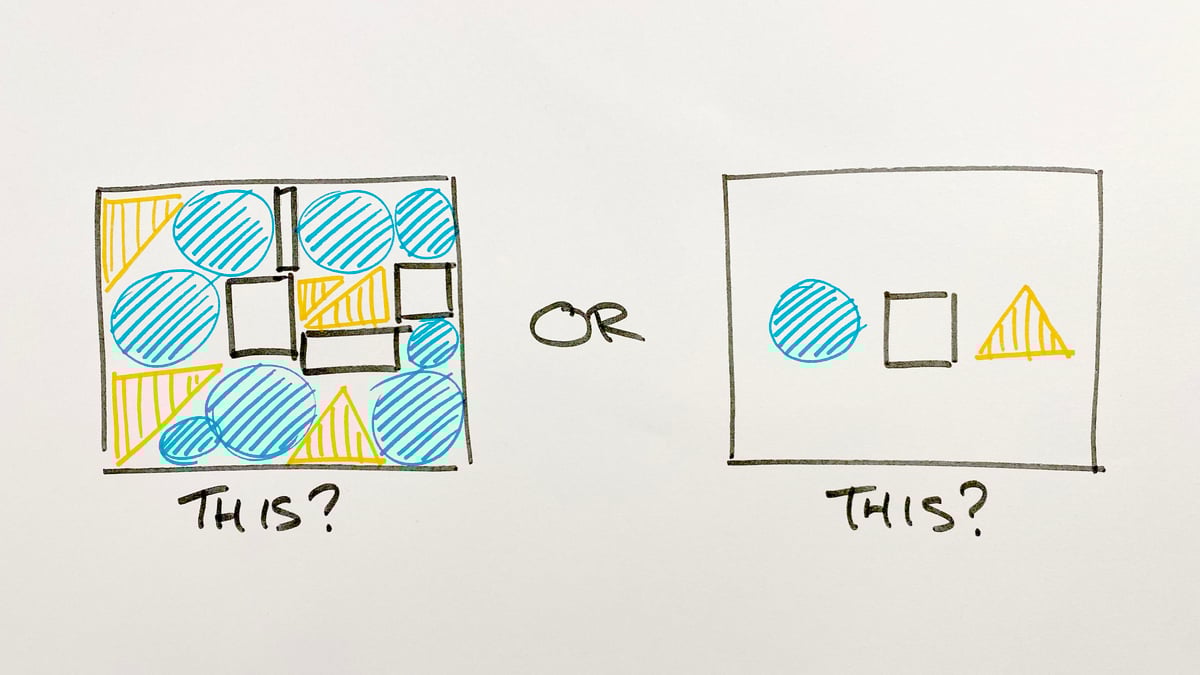
I’ve seen countless portfolios where talented people try to show everything they’ve ever touched — render after render, slide after slide — hoping that the breadth will bowl over an interviewer. But here’s the truth: it might bowl them over, just not in the way you think.
Because focus speaks louder than volume.
Portfolios that show judgment — that know what not to show — create trust immediately. They tell me this person understands how to communicate, how to prioritise, and how to design for the audience. When you’re in a pack with tens or hundreds of other applicants, this can make the difference between landing an interview and being flipped past.
⸻
The Real Goal of a Portfolio - Hook Their Attention
What is the real purpose of your portfolio?
It’s not to prove your worth — it’s there to earn a conversation. That’s it. You’re not trying to sell yourself outright; you’re trying to hook the reviewer’s curiosity.
Overstuffed portfolios often do the opposite. They may show range, but they can also suggest a lack of focus — or worse, insecurity. They say, “I didn’t know what to leave out,” or “It’s easier for me this way,” or, worst of all, “I don’t care that much about this job, so I left it all in.”
Look, it’s not a crime to show absolutely everything — it’s just a missed opportunity.
The best portfolios, the ones that get people invited in, are lean, coherent, and tuned to what matters for that particular role.
Think of your CV or résumé and your portfolio as two sides of the same story:
• The CV provides structure — what, where, when. The facts.
• The portfolio adds colour — how, why, and who you are through your work.
As designers, we need to hone both to their purpose.
⸻
The Same Dials, Different Settings
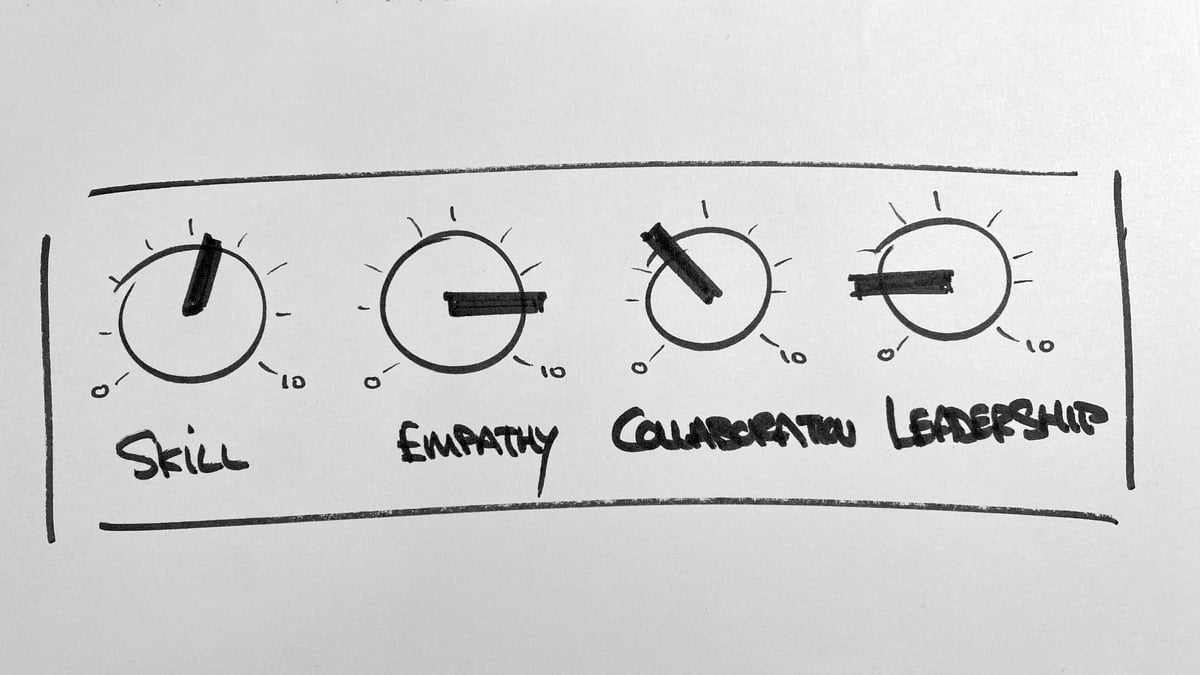
Focus doesn’t mean the same thing for everyone. It depends on where you are in your career. But the dials are pretty much the same for all of us — skill, empathy, collaboration, and leadership — we just tune them differently depending on our experience level and role.
The fundamentals don’t change. The best juniors already show signs of empathy and teamwork. The best directors still keep their craft sharp enough to connect with their teams.
A junior designer showing curiosity about leadership stands out.
A director who understands the tools their team uses earns respect instantly.
A mid-level designer who can both “get stuck in” and calmly lead a client meeting? Gold dust.
⸻
Know Your Audience
Before you touch a slide, start with empathy for the role you’re applying for.
Read the job description like a designer — as a brief. What’s written explicitly, and what’s implied between the lines?
Then dig deeper. Research the company, their strategy, their products, their people. Check reviews from employees on their way out for tone clues. Look up the hiring manager — what kind of work do they celebrate publicly?
Now connect your projects and stories to their needs. You’re not trying to match every bullet point in the job description (trade secret: nobody does!). If you don’t know that particular tool, do you know a similar one? Can you show how quickly you’ve picked up new systems before? There are lots of ways to close apparent gaps.
But remember, this isn’t about gaming the process — it’s about showing empathy for your audience and telling them a story that matters to them.
⸻
Don't Fall in Love with Your Own Designs.
Resisting the urge to show everything you’ve ever done is harder than it sounds.
But one of the first lessons (a hard one) I learned when looking for work was: Don’t fall in love with your own designs.
Unfortunately, others don’t automatically love your designs either — I’m sorry, it’s true. As hard as it is, you must try to look at your work objectively when selecting for your deck, or better yet, from the perspective of the hiring team. Tough, but necessary. You could also ask someone you respect to give you some feedback, someone you can trust to be straight with you.
That objective lens makes restraint easier — and restraint reads as confidence. It shows judgment, empathy, and focus — traits every team values.
When I see a focused portfolio, I immediately feel at ease. It says:
“This person knows what matters. They understand how to design communication itself and they have thought deeply about this role.”
⸻
Build, Then Edit, Then Curate
Think of your portfolio as a living thing — never finished, always evolving.
Start by building a master deck that holds everything you've done: every project, every story, every visual. It’s your personal archive. Then, for each job application, curate. Select the few projects that connect most strongly to what that specific employer values.
Tip: It's a good idea to do this when you're not in a hurry to find a new job. Maybe take a few weeks to go through everything in a quieter moment and revisit and build on it each year.
What the interviewer sees should feel purposeful — like the work was chosen just for them. It’s a bit like magic: they see only what you want them to see. Each project becomes a hook. It gives a glimpse of skill, story, and attitude. Each one should show a piece of your why — why you care, why you work the way you do, and what you value in collaboration.
When done well, this creates a tight, meaningful portfolio that leaves reviewers wanting more. Remember, brevity and conciseness aren’t limitations — they’re superpowers. They demonstrate clarity, confidence, and self-awareness.
Tip for students: take lots of pictures of your work as it evolves — and of you engaging in your work. Not stagey, just honest. Try to capture your true curiosity and passion.
Also, take note of key decisions you’ve made and consider drawing the development of your work as a diagram or workflow. These can be incredibly helpful additions that add heft to your first portfolio deck when the list of work experiences is still growing.
(See my other article “Put the YOU Back in YOUr Portfolio” for more on this.)
⸻
What You SHOW vs What You KNOW
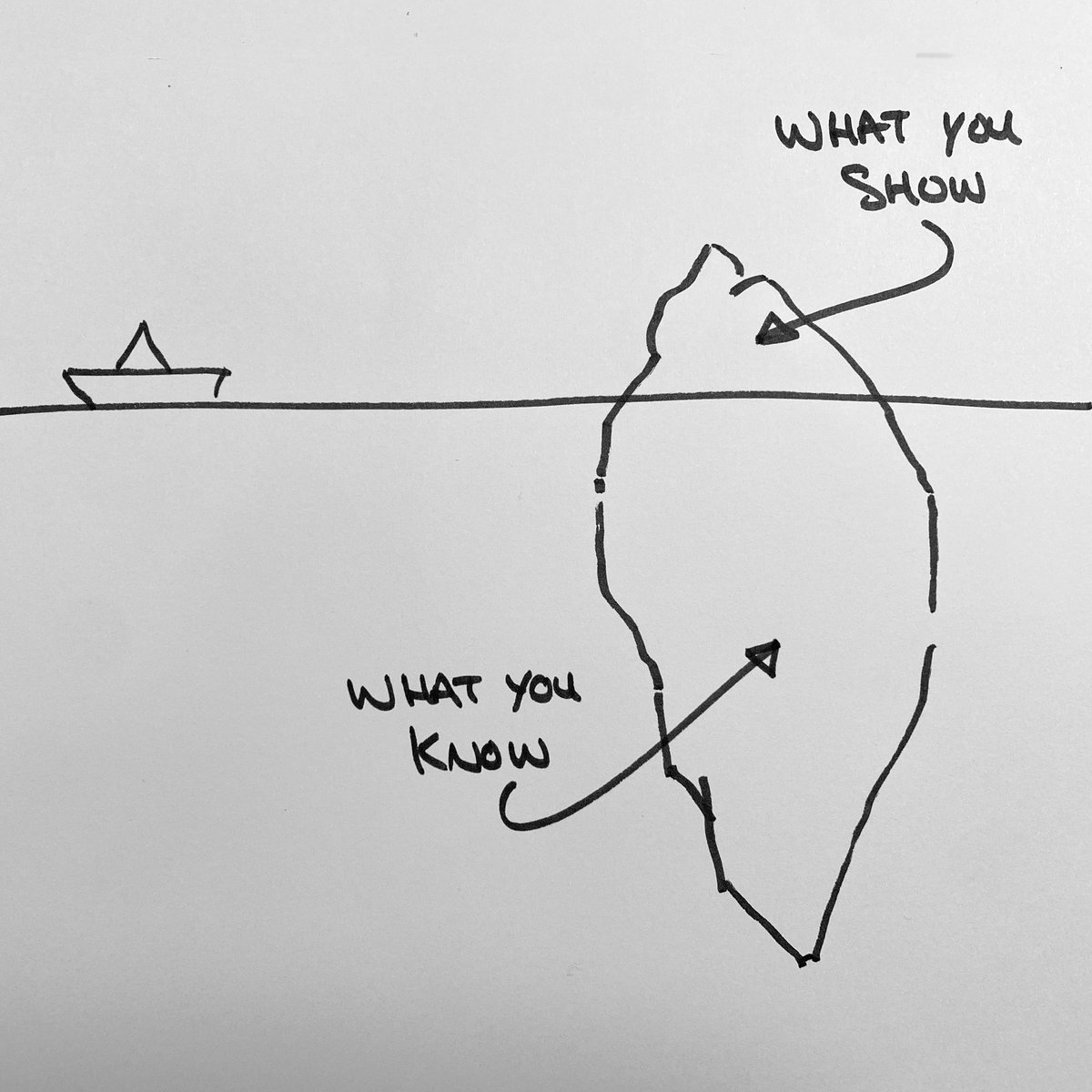
Here’s the good news: by building that long-form master portfolio, you’ve already done the hardest part. You’ve internalised your whole body of work. You know the stories, the decisions, the context. When you distil that into a focused deck for a specific role, you carry all that depth with you into the interview.
Now imagine this interview question:
“I was really interested in this prototype. Do you have other examples?”
Of course... you do — they’re ready in your mind, and maybe you've brought an expanded portfolio to the interview for this eventuality.
That’s the magic of preparation with focus. You can stay concise — and still have range in reserve. It tells the interviewer you have both focus and depth. You’re confident enough to curate and capable enough to expand. This creates real credibility.
⸻
From Hook to Clincher
Think of your portfolio as the hook and the interview as the clincher. The portfolio sparks curiosity; the interview seals belief. When you get to interview — show your joy, your purpose, your energy. Bring your “B plot”: the behind-the-scenes stories, the lessons learned, the collaborative wins. The things that aren't visual, that might be difficult to describe in a portfolio but that you can express now with your own words and your enthusiasm.
Let them feel the human side of your process. When interviewers see genuine enthusiasm and presence, it’s infectious. They can imagine working with you — and that’s half the battle won.
⸻
Confidence Through Curiosity
If you want to show confidence in an interview, don’t perform — engage. You can comfortably tone down the power stance, the overbearing hand shakes and all the other inauthentic trappings of the appearance of confidence. Try asking questions. Reacting thoughtfully. Turn their prompts into dialogue. When they say, “I was intrigued by this project — can you tell me more?” is their invitation for you to show curiosity, not just competence. End each story with what you learned — that’s the mark of someone who’s still growing, not just showing off.
All of these pointers help you make a connection at a personal level and to focus your attention on your passions and your interests while avoiding trying to serve or satisfy your interviewer.
Oh, and don't forget to ask them questions too. After all, you're kind of interviewing them as well, right? You want to work with great people, grow your skills, and your self, and have a good time while you're at it, right? So, think honestly about what you need to know, what you're curious about and ask those questions frankly. You will earn respect for that.
If you walk out of an interview thinking it felt more like a conversation, you can be confident that you're in a really good place.
⸻
The Takeaways
The best portfolios — and the best designers — are not loud. They’re clear. Think of focus as empathy in disguise. It shows that you’ve taken the time to design for your audience, not just for yourself.
When preparing your portfolio, curate with intention. Seek help to hone and craft objectively. Ensure your deck is clear and memorable with a few hooks that stimulate questions at interview.
During the interview, connect with depth and joy. Treat each interview as an opportunity to learn something new, to meet someone interesting and to talk to them about your shared passion for design. When I started looking at interviews in this way, I got way better at them, I got more call backs and I just started having more fun with them. My best interview was the one where I prepared the most and stressed the least.
After the interview, reflect with honesty. How did it feel? Did you make a personal connection? Did you show your range, capabilities and passion? Ask yourself frankly, does it really suit me? Will it help me grow? Will I be happy there?
Across all stages of your career, at interview try to make sure you're giving a sense of your four dial settings — skill, empathy, collaboration, and leadership. These are the beats you should always try to hit.
Good luck!
Tags:
#designcareers #mentorship #portfoliotips #empathy #collaboration #growthmindset #authenticity