My route into tech
I did not come into tech through the usual route, and for a long time I assumed that would keep me on the outside looking in. I started out selling after event insurance door to door, shifting seven policies a day, knocking on strangers’ doors and helping people who had been in accidents claim compensation, it wasn't glamourous, or particularly ethical. I needed a thick skin and had to learn fast what counted as an accident and what did not. The rejection was constant and the wins were a big relief. That was more than twenty years ago. Today I am the founder of an AI company, I have written over one and a half million lines of code in just six months. Before that I ran a one hundred million dollar division inside a FTSE 100 business and served as CEO of an AIM listed PLC. Absolutely none of that was planned, none of it was linear, and none of it fits the tidy story people like to tell about what a career is meant to look like. The point of it, for me, is simple. The right background is not something you start with. It is something you build through repetition, pressure, resilience, and an obsessive focus on learning.
My move into technology was not a strategy.
I liked gadgets (I still do in truth, ask my wife), and I walked into Phones4U to buy a phone one day, I ended up chatting to the store manager, she interviewed me on the spot and I was offered a job. That one conversation changed everything. On my first day a manager I had never met told me it was the best first day he had ever seen in retail. Not long after, I sold one hundred phones to a single customer. Those were not simple sales wins to me, they were early proof that if you listen properly, understand what someone is actually trying to achieve, and can translate complicated technology into plain language, you can create trust quickly and you can per
When I was asked to join the training team to teach others how to sell, I genuinely thought I had reached my ceiling (I was blown away at having a company car). I believed that was as far as I could go, and looking back, that belief says a lot about what happens when you do not see people like yourself in leadership roles. You do not just doubt your skills, you struggle to picture the next step as something you are allowed to take.
The big leagues(?!)
The first time I walked into a room full of traditional tech executives, it hit me like a Mike Tyson uppercut. At Inmarsat (I was too junior to be quoted, but this was me) there were consultants from the big firms, MBAs everywhere, engineering degrees everywhere, a few PhDs dotted around and I felt totally out of place, like I was playing dress up in someone else’s career. One of the clearest imposter syndrome moments was during the Brexit period when we were asked to work on the soft border using IoT. I found myself in a meeting in a Mayfair office with a large consultancy and a member of the House of Lords. I had a choice. Do it or do not. If I shrank back, I would make my colleagues, myself, and Inmarsat look amateurish. So I treated it like any other meeting. Focus on the problem, ask sensible questions, contribute what I knew, and stay calm. That was when I learned something important. The imposter feeling is not a signal that you do not belong. It is often just a signal that you are growing. It did not disappear, it still hasn't but I learned to treat it as noise.
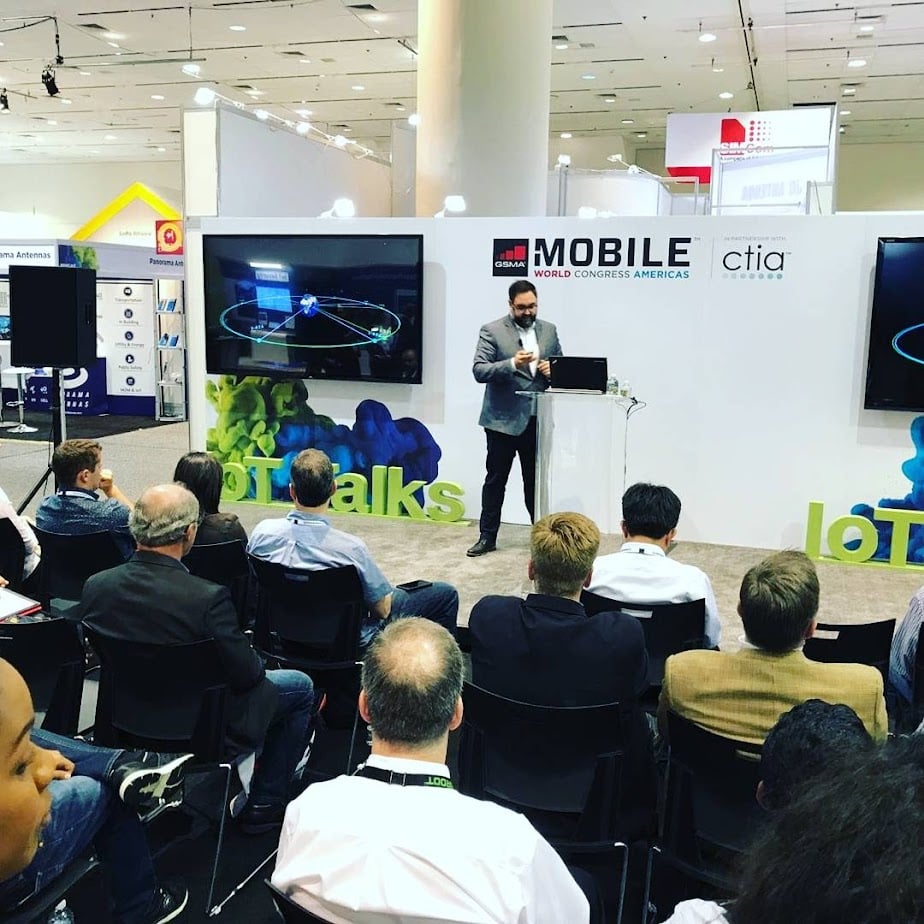
Over time I realised something else that people do not tell you. The lack of traditional credentials can become an advantage if you lean into the reality of what you have actually done. At Phones4U we were rolling out a new stock management process across eight hundred stores. I was tasked with auditing the system and building a training plan. Most of the team had business backgrounds and strong academic credentials. None of them had spent years on the shop floor, dealing with the shortcuts, the incentives, the workarounds, and the games people play when nobody is watching. I had.
I knew exactly how the system would be exploited and where it would break. That insight helped save twenty million pounds a year in stock loss. Not because I was more intelligent than anyone else, but because I had lived the ground truth, and ground truth is often what the slide decks miss. The same pattern repeated at BlackBerry. Selling into the channel was brutal, with Samsung, Apple and HTC fighting for shelf space. My shop floor experience meant teams identified with me and trusted me. My team of forty five reps sold a million devices in a year. When you were a challenger brand, that was a big number. While others were theorising about channel strategy, I was speaking the language of the people who actually moved product. There is nothing wrong with traditional education, but there are multiple kinds of expertise, and the best leadership blends them.
I was diagnosed with ADHD late in my career, but it explained a lot. It explained why sales fit so well, the speed, the chase, the hyperfocus, and it explained why long meetings drained me and why I had to work obsessively hard on structure and process. To function, I built systems for myself. Over time, process became a core skill and a coping mechanism. Today the power of process is what I have built my business around. In leadership, ADHD also gives me an edge. I see possibilities and eventualities quickly, and I am often answering questions people have not even asked yet (in my head, at least usually). What looked like a deficit became my competitive advantage once I understood it and built around it.
Practical not just academic success
People still say I am not a trained engineer. That is true. But I have erected IoT masts in London, Kigali and Malaysia. I have built applications from scratch. I learn by doing and I always need to get my hands dirty. Leading engineering teams taught me to think structurally, and that foundation is what I lean on even now. AI powered coding tools have lowered the barrier to building, but you still have to think clearly about architecture, logic, and what the end product needs to be. Coming from a non technical background influences how I build in a good way. I think like an end user. I think like someone who has qualified customers for a living. I am less interested in building something that looks clever and more interested in building something that solves a real problem for a real person.
The bigger career jumps happened because a specific problem appeared and I happened to have the right mix of experience to tackle it. Inmarsat wanted to understand retail and explore pushing satellite products into stores. My background let me see things others could not. After a couple of years of solid work, I took a risk and made a proposal that would change the direction of the company. It was well researched and it landed at the moment satellite was being commoditised. The risk paid off. Later, when I got the call about a CEO role, it was a smaller team but an enormous responsibility. By then I had spent years watching leadership decisions and thinking about what I would do differently. I was ready, even if it felt audacious to admit it. Within nine months I became CEO of an AIM listed SaaS business. I delivered a seven times sales pipeline increase and secured a transformational merger that created a seven to one uplift in share value. At Inmarsat I ran a one hundred million dollar commercial division and reversed a decline into double digit year over year growth. None of this was supposed to be possible for someone who started out knocking on doors.
What this means for others, or maybe even you
I mentor a lot of people from unconventional backgrounds now, and the limiting belief is almost always the same. They assume they should not share their ideas because they are afraid of looking stupid. They compare themselves to people with credentials and forget that lived experience counts, often more than people want to admit. One of my most rewarding mentoring relationships was with an ex Royal Marine engineer. He was incredibly capable but had no belief in his commercial ability. Over time he flourished, earned an MBA, took on bigger roles, and then started hiring other ex military people and bringing them through the same journey. The misconception is that non traditional paths lack knowledge. The truth is the knowledge is often different, and in many cases deeper, because it has been earned the hard way.
If there is one truth I always come back to, it is that the most difficult transition is sales to management. Carrying a number while carrying people is a whirlwind and that first leadership role either breaks you or shapes you (a cliché, but a turism too). I have worked across five continents and the biggest lesson is always the same. Treat people as individuals. Invest time. Build teams with different perspectives, not because it looks good but because it solves problems better. In some ways, investors however, are my kryptonite, because they are trained to test you and put you back in your box. The only way I have found to handle it is preparation, presentation, and the unshakeable belief that what you are doing matters. Know the numbers. Know the story. Practice until it is automatic.
Shaping the future
I would also change how companies hire. Judge on virtues and performance, not certificates. Stop writing degree requirements into job adverts by default. Hire for attitude and aptitude. Women remain underrepresented in tech, especially at senior levels, and it needs to change urgently. Every business comes back to the customer. If you are not thinking about what finds customers, wins customers, and retains customers, you will be dead in the water. Many technically brilliant founders miss that. Revenue flatters. Profit disciplines. Cash keeps the lights on. There is no perfect set of commercial terms. They have to evolve constantly as customers and markets shift.
If you are in retail or sales right now and you want more, focus on the fundamentals. Take responsibility. Build a plan. Move companies if there is no path forward. The hard days compound. Breaking into tech leadership is possible, but it is not easy and it has to be something you genuinely want. You will often work harder than people with traditional credentials just to prove you belong. It is not fair, but it is real. The upside is that once you prove yourself, your background becomes your differentiation. You see things others miss. You connect with teams and customers in a way theory cannot teach. I interviewed at BlackBerry twice and did not get the job the first time. I used that rejection as fuel. Being underestimated is a gift if you know how to use it.
Learnings to take away
I would not trade my path for a traditional one. It took me places I never expected. I have been lucky, yes, but I also made my own luck by refusing to accept that my starting point disqualified me. Today I am building Reflow AI and giving back through work in the public sector. If we can make one school better for its pupils, that is a win for me. I still want to learn more and I probably always will. I would love to do more in silicon design and manufacturing, and I might even do an engineering degree one day for fun because it fascinates me. But the gaps do not frustrate me the way they used to. I have learned there are many paths to expertise, many ways to lead, and many types of intelligence that matter. Door to door sales taught me resilience. Phones4U taught me people. BlackBerry taught me competition. Inmarsat taught me strategy. Leading a PLC taught me pressure. ADHD taught me systems. All of it together taught me that the right background is the one you build yourself, one rejection and one win at a time.