Pathrise promises job placement with no upfront cost, but their income share agreement means you could pay thousands after landing a role. Before you commit to giving up 9% of your first year's salary, you need to understand what you're actually getting, what real users say about the program, and whether alternatives might offer better value for your career investment.
I've facilitated over 12,000 mentorships through MentorCruise since I founded it in 2018. I've watched people struggle through career transitions, evaluate coaching programs, and sometimes get burned by services that overpromised. This review draws on that experience, plus research into what actual Pathrise participants say across Reddit, Trustpilot, and Quora.
Why Pathrise Exists and Who It's For
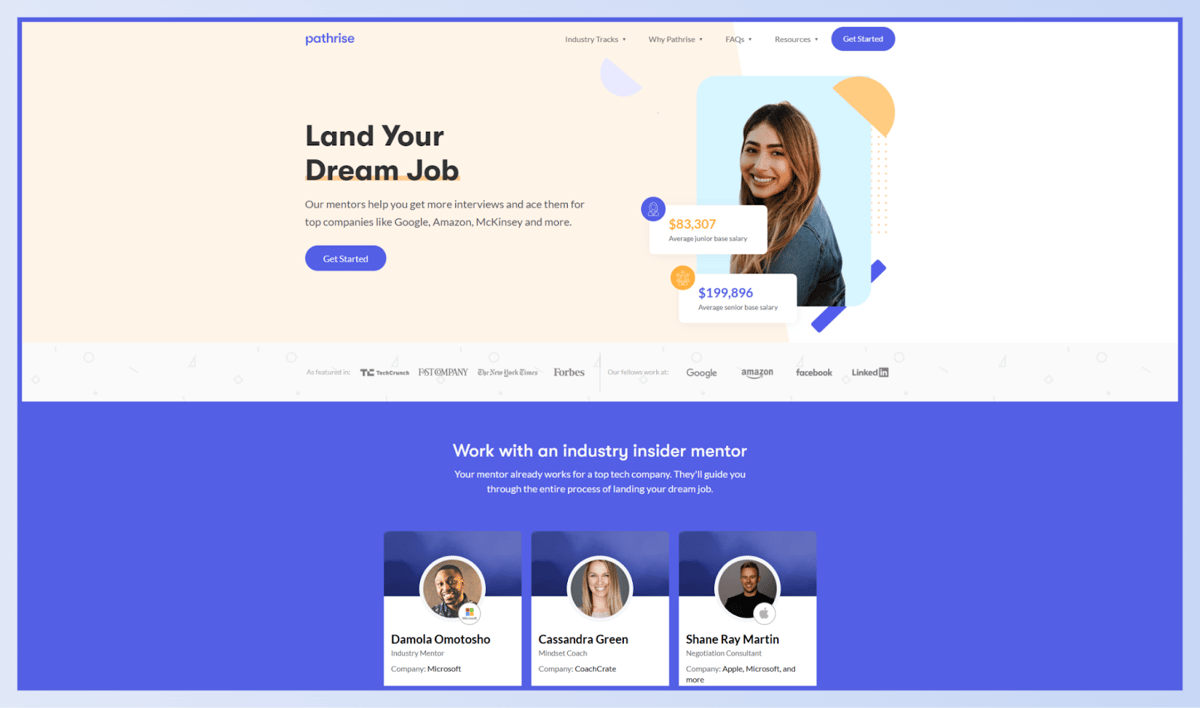
Pathrise positions itself as the bridge between skills and employment. Bootcamps teach you to code. Universities give you theory. But neither teaches you how to actually land a job. That gap is where Pathrise says it adds value.
The program targets recent graduates and career changers who have technical skills but struggle with the job search itself. If you're sending out dozens of applications without getting interviews, or bombing interviews despite knowing the material, Pathrise claims to fix that. Their mentors come from companies like Google and Meta, and they focus specifically on the mechanics of job searching: resume optimization, LinkedIn presence, interview preparation, and salary negotiation.
What Is Pathrise's Actual Success Rate?
Pathrise claims a 96% placement rate, but that number needs context. The success rate measures participants who complete the program and actively engage with their mentor. It doesn't count people who drop out, disengage, or realize the program isn't right for them.
On Trustpilot, Pathrise shows 9 of 12 reviews as positive, but that's a tiny sample size for a program that's been running since 2017. Reddit threads paint a more mixed picture: some users praise their mentors and credit Pathrise with landing them jobs at target companies, while others describe mentors who were unresponsive or gave generic advice they could have found on YouTube.
The honest answer is that success rates in career programs are notoriously hard to verify. Programs that use income share agreements have incentive to report favorable numbers because their revenue depends on it. That's not to say Pathrise is lying, but you should treat their statistics as marketing claims, not independent research.
What Real Users Say About Pathrise
User reviews cluster around a few consistent themes. The positive reviews highlight structured accountability: having someone to review your resume weekly, practice interviews with, and push you to actually apply keeps people from spiraling into job search paralysis.
The complaints focus on three areas. First, mentor quality varies significantly. Some users describe mentors who were genuinely helpful, with relevant industry experience and actionable advice. Others got mentors who seemed disengaged, missed sessions, or provided feedback so generic it could apply to anyone. One Reddit user described getting three different mentors in two months because of scheduling conflicts and quality issues.
Second, the program structure can feel rigid. Pathrise has specific phases you move through: resume optimization, then interview prep, then applications, then negotiation. If you need help in one area more than others, the one-size-fits-all progression can feel frustrating.
Third, and this comes up repeatedly on Reddit, the income share agreement feels more expensive in hindsight than it seemed upfront. When you're unemployed, paying nothing now sounds great. When you're employed and watching 9% of your paycheck disappear for two years, the math feels different.
What to Expect From Pathrise Sessions
Pathrise is a career accelerator, not a bootcamp. They don't teach you how to code or do data analysis. They assume you already have those skills and focus entirely on the job search process.
What Does Pathrise Actually Offer?
The core offering is one-on-one mentorship with someone who has hiring experience at top tech companies. Your mentor helps you optimize your resume and LinkedIn profile, practice behavioral and technical interviews, build a target company list, and eventually negotiate offers.
Beyond the 1:1 sessions, Pathrise provides curriculum content: videos, templates, and frameworks for each stage of the job search. They also have industry tracks. If you're targeting product management roles versus software engineering versus data science, the content and mentor pairing should reflect that specialization.
Students typically work with their mentor for 3-6 months before landing a role, though this varies widely based on market conditions, experience level, and how actively you engage.
Realistic Job Placement Expectations
If you're expecting Pathrise to guarantee you a job at Google, recalibrate. The program helps with the mechanics of job searching, but it can't overcome fundamental mismatches between your experience and target roles, weak market conditions in your industry, or lack of effort on your end.
Realistic expectations look like this: you'll get structured accountability, expert feedback on your materials, and practice with someone who's seen hundreds of candidates. That support meaningfully improves your odds, particularly if you've been struggling alone. It doesn't eliminate the randomness inherent in hiring.
How to Get the Most From Your Pathrise Experience
Users who report positive outcomes share common patterns. They treat sessions like appointments, not optional drop-ins. They come prepared with specific questions or materials for feedback. They apply their mentor's advice between sessions rather than waiting to be told the next step.
The mentees who complain most often seem to expect Pathrise to do the work for them. A mentor can optimize your resume, but you still have to submit applications. They can practice interviews, but you have to show up and perform. The program is high-touch compared to going it alone, but it's not a done-for-you service.
How to Choose the Right Career Coaching Program
Before committing to any career accelerator, understand what you're comparing. Pathrise is one option in a crowded market that includes IGotAnOffer for interview prep, traditional career coaches, and ongoing mentorship platforms like MentorCruise.
How Pathrise Compares to Alternatives
The key difference between Pathrise and most alternatives is the payment model. Pathrise uses an income share agreement: you pay nothing upfront, then 9% of your salary for 24 months after landing a job. Other programs charge fixed fees or ongoing subscriptions.
IGotAnOffer focuses specifically on interview preparation for consulting and tech roles. If your main gap is interviews, they might be more targeted. If you need broader help with the entire job search, Pathrise offers more complete support.
Traditional career coaches typically charge $100-300 per hour. For intensive support over several months, that adds up to thousands of dollars. The advantage is flexibility: you can focus on exactly what you need. The disadvantage is no risk-sharing. You pay whether you land a job or not.
At MentorCruise, we take a different approach. Our mentors charge subscription rates starting at $120/month, and you can cancel anytime with no long-term commitment. You get ongoing support, async messaging between sessions, and a free trial to test the fit before you commit. Unlike Pathrise's ISA model, you never owe a percentage of your salary.
Common Complaints and Red Flags
When evaluating any career program, watch for these patterns from Pathrise complaints that apply broadly:
Vague mentor credentials. "Worked at a top company" is meaningless without specifics. Ask which company, what role, how long, and whether their experience matches your target.
Rigid program structures that don't adapt to your needs. If you're already good at interviews but struggle with networking, a program that forces you through interview prep anyway wastes your time.
Difficulty canceling or pausing. Pathrise locks users into 12-month commitment windows. If your circumstances change, that inflexibility can become a problem. Programs with monthly cancellation offer more protection.
Claims without verification. Any program can claim a 96% success rate. Ask how they define success, what their dropout rate is, and whether third parties have verified their numbers.
Questions to Ask Before Choosing
Before you commit to any program, get clear answers to these questions:
What specific outcomes can I expect, and in what timeframe? Push for realistic ranges, not best-case scenarios.
How are mentors matched and vetted? What's the acceptance rate for mentor applicants? At MentorCruise, we accept fewer than 5% of applicants to ensure mentor quality.
What happens if my mentor isn't a good fit? Can I switch without penalty?
What's the total cost in realistic scenarios? For ISA programs, calculate what 9% of your expected salary actually means over 24 months.
What ongoing support exists after I land a job? The first 90 days in a new role are often harder than the job search itself.
Pathrise Costs and Investment
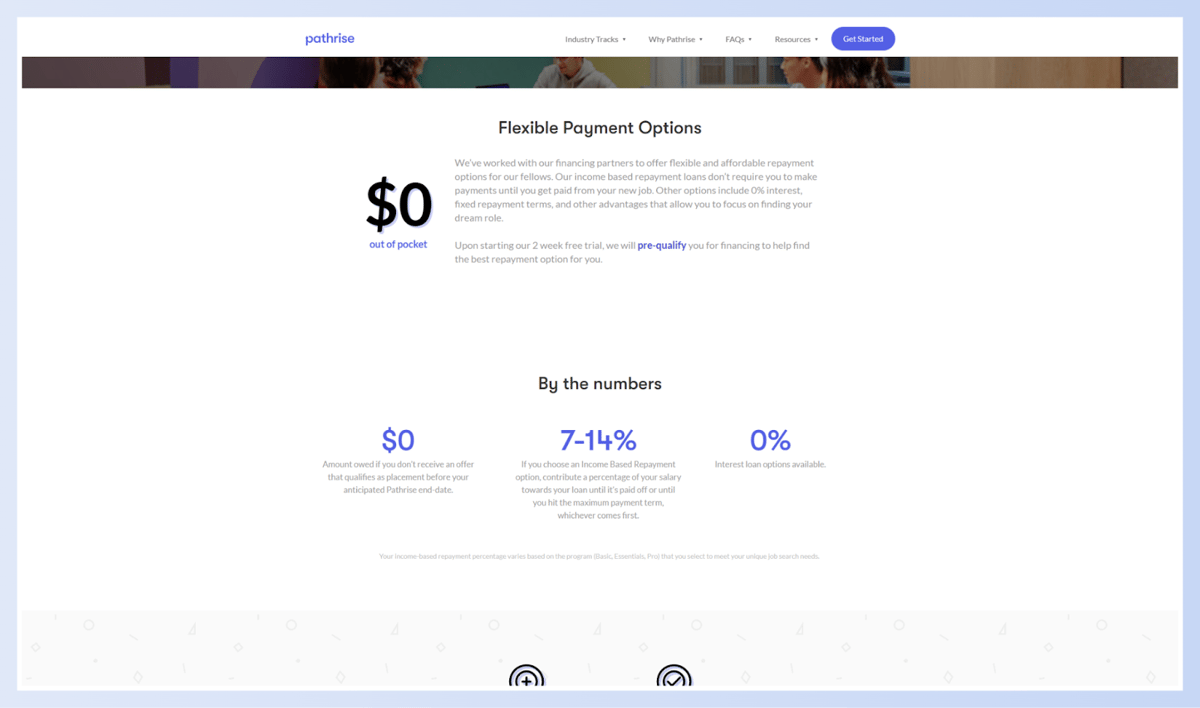
The income share agreement is Pathrise's defining feature, and understanding the real numbers matters before you sign.
How Much Does Pathrise Cost?
Pathrise charges 9% of your gross salary for 24 months after you land a qualifying job. There's a cap at approximately $10,000-12,500, though exact terms vary.
Let's run the math. If you land a $100,000 salary, 9% is $9,000 per year. Over two years, that's $18,000, which would hit the cap. So you'd pay roughly $10,000-12,500 total.
If you land a $70,000 salary, 9% is $6,300 per year, or $12,600 over two years. You might also hit the cap, depending on your specific agreement terms.
The ISA only triggers if you land a job paying above a threshold (typically around $50,000). If you don't find work, or find work below the threshold, you don't pay. That's the risk-sharing element that makes the model appealing upfront.
Understanding Income Share Agreement Terms
The ISA model has genuine advantages for people with limited savings. You're not taking on debt or paying out of pocket while unemployed. The program has skin in the game: they only get paid if you succeed.
I've seen this play out both ways at MentorCruise. One mentee came to us after leaving Pathrise mid-program because they'd landed a job on their own but still owed payments under the ISA terms. Another switched from hourly coaching because they wanted the accountability structure but couldn't stomach the percentage. There's no universally right answer; it depends on your confidence level and financial situation.
But ISAs also have downsides that aren't obvious upfront. The percentage comes from gross salary, not take-home pay. If you're in a high tax bracket or expensive city, that 9% hurts more than it seems.
You're committed for 24 months regardless of how long the program actually helped you. If you land a job in month two and spent months three through twenty-six on your own, you're still paying.
And the total cost can exceed what you'd pay with a traditional coaching arrangement. If you're confident you'd land a job regardless, paying $2,000-3,000 for targeted help might be smarter than risking $10,000+ through an ISA.
Is Pathrise Worth the Cost?
The honest answer depends on your alternatives. If you're broke, struggling, and have no other support system, paying nothing upfront to get structured help makes sense. The ISA is essentially a loan against your future income.
If you have some savings and discipline, monthly mentorship might offer better value. At MentorCruise, you could work with a career coach for $120-300/month. Even at $300/month for six months, that's $1,800. If you land a $100,000 job, you've paid 82% less than you would through Pathrise's ISA.
We also offer a 97% satisfaction rate across 20,000+ reviews, a free trial session with every mentor, and cancel-anytime flexibility. You're not locked into a 12-month commitment or giving up a percentage of your salary.
More Affordable Mentorship Options
If the ISA math doesn't work for you, here's what else is available:
Traditional career coaches typically charge $150-300/hour. For focused help on specific gaps, this can be cost-effective. For ongoing support, costs add up quickly.
Interview-specific platforms like IGotAnOffer focus on mock interviews and case prep. If that's your main gap, they're more targeted and often cheaper than full-service programs.
Ongoing mentorship through MentorCruise starts at $120/month with no long-term commitment. You get regular sessions, async messaging between calls, and a mentor matched to your specific goals. If you find a job after three months, you stop paying. There's no percentage of your salary involved.
The key is matching the program to your actual gaps. If you need six months of full support, Pathrise's ISA might make sense. If you need two months of interview prep or ongoing advisory after you land, more flexible options offer better value.
Frequently Asked Questions
Is Pathrise Worth It?
Pathrise is worth it if you're struggling with the job search process, have limited savings, and value the risk-sharing of an ISA. It's less worth it if you're confident you'd find a job anyway, have savings to invest in more flexible support, or dislike the idea of paying 9% of your salary for two years. The program provides real value, but the ISA model means that value costs significantly more than alternatives if you're successful.
Is Pathrise Legitimate?
Pathrise is a legitimate company, not a scam. They've been operating since 2017, have placed people at real companies, and have both positive and negative reviews from actual users. Legitimacy isn't the question. The question is whether their specific model offers good value compared to alternatives. Some users say yes. Others feel they overpaid for what they received.
What Does Pathrise Cost Through the ISA Model?
Through the ISA model, expect to pay $6,000-12,500 total, depending on your salary and specific agreement terms. The 9% rate for 24 months is standard, with caps that vary by cohort. Calculate your specific numbers before signing: multiply your expected salary by 0.09, then by 2, then compare to the cap in your agreement.
How Long Until I See Results?
Most Pathrise participants land jobs within 3-6 months of active engagement. Results depend heavily on market conditions, your background fit for target roles, and how actively you participate. The program can't guarantee a timeline, and you should be skeptical of any career program that does.
How Do I Know If I Need a Career Coaching Program?
You likely need structured support if you're applying to jobs without getting interviews (resume or positioning problem), getting interviews but not offers (interview skills problem), or paralyzed by the job search and not taking action (accountability problem). If you're progressing steadily on your own, you might not need to pay for help. If you've been stuck for months, outside perspective usually accelerates progress.
What Should I Look For When Choosing a Career Program?
Look for mentors with verified, relevant experience at companies you'd want to work for. Look for flexibility in structure so you can focus on your actual gaps. Look for clear terms on cancellation, total cost, and what happens if it's not working. And look for third-party reviews on platforms like Trustpilot and Reddit, not just testimonials on the company's website.