There's a question I ask early now, and it lands badly almost every time. Of everyone who installs, how many ever reach the paywall?
Almost nobody knows. Not because the tooling is missing — these days the subscription layer is wired up, product analytics are installed, the store listing has been optimised, paid campaigns are already running. The dashboard exists. Nobody has opened it with a question in mind.
Meanwhile the app has been rebuilt twice.
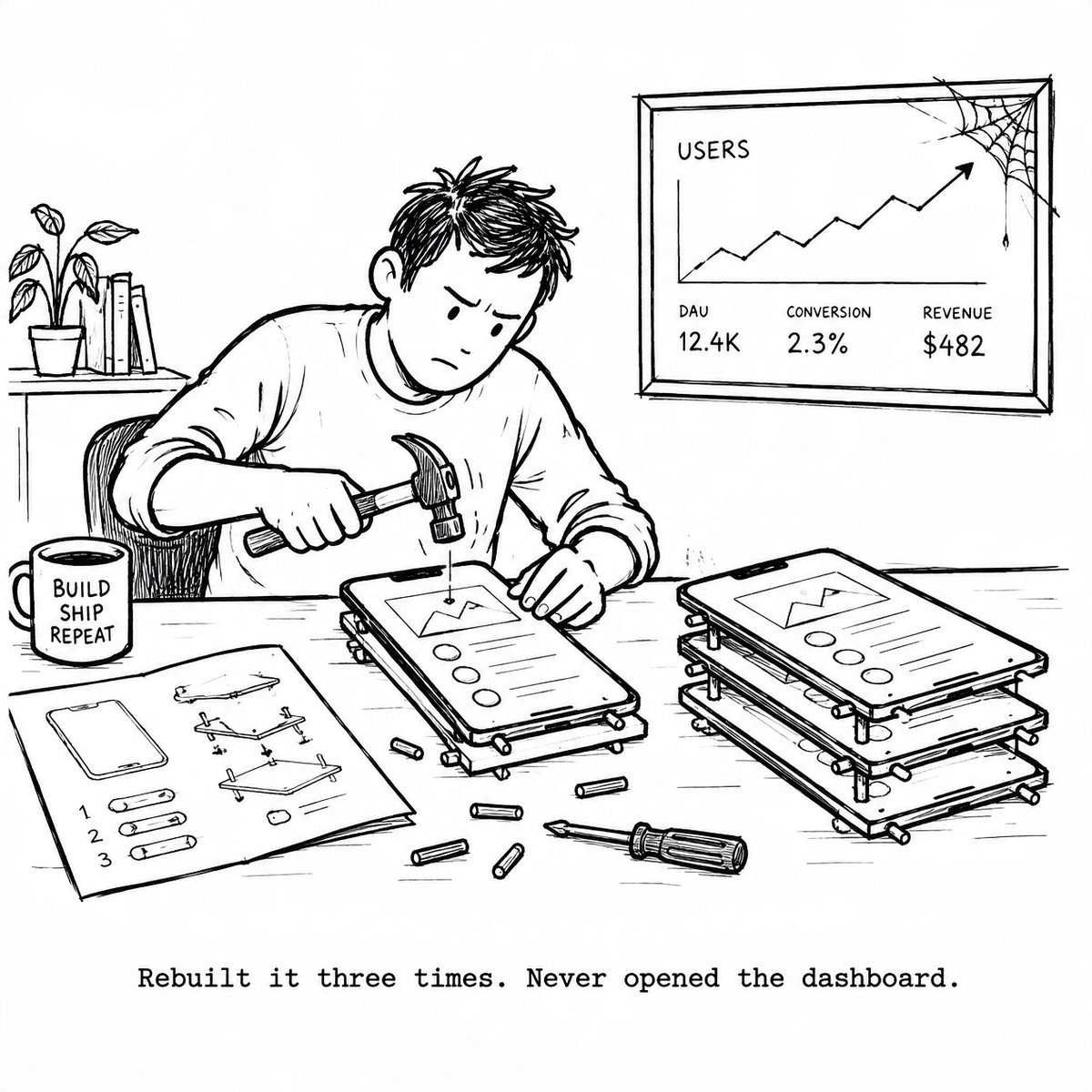
Rebuilding is now cheaper than diagnosing
That's the shift I'd point at if I could point at only one thing this year. Shipping a new onboarding flow takes a weekend. Sitting with your own funnel to find the step where people leave takes a slow afternoon and produces nothing you can show anyone.
So we rebuild. New onboarding, simpler home screen, better first-run experience, a fresh build out to testers. All of it genuinely improved, none of it aimed at a known problem. I've watched capable people iterate three times on a screen that a small fraction of installs ever reach.
Having analytics is not the same as reading them. In a month of work I have never once had a founder tell me the dashboard was missing. I very often have them tell me nobody had looked.
What I see when I install apps
I install a lot of apps as part of my work, and a pattern repeats so reliably that I now look for it on purpose.
Partway through onboarding, before I have done anything at all, the product asks me to rate it. A rating is a favour. I'm being asked for a favour by something that hasn't yet done anything for me, and the ask pulls me out of the one job I came to finish.
Then, still before I have produced anything, something tells me not to break my streak. I have no streak. Often the trial countdown on that banner doesn't match the number I was promised two screens earlier.
So the first two messages the product sends me are a request and a warning, and both arrive before it has given me a single thing.
None of that is carelessness. Each element exists for a defensible reason, and most of them now arrive as standard parts of whatever you built with. Nobody sat down and decided to ask a stranger for a review. It came with the template, and six months later someone is running experiments on screens they never consciously added.
Onboarding is a trade, and you're asking them to pay first
Here's the reframe. We talk about onboarding as a sequence of steps to minimise, which is why the work always turns into shortening forms and merging screens. It isn't a sequence. It's a trade, and right now the person pays in advance — attention, personal answers, an account, permissions, sometimes a review — for something that hasn't proved anything yet.
You can't feel that price from the inside, because you already know the product is good. The person on screen two doesn't.
I paid for this lesson in my own company. We sold into businesses, but the people who actually had to use the thing were restaurant owners. Our first version made them install an app, register, and keep a password, because we cared about security and it felt like the responsible thing to build. Four reasonable doors. The man opened none of them, and we lost a pilot we had spent a year winning.
So flip the order for anything that serves you rather than them. Let them get the result first and ask once they have a reason to say yes. The products that do this well you've already used without noticing: you edit, compress or sign something, and only when you want to keep it does anyone mention an account. By then the account isn't a toll. It's storage for something you now care about.
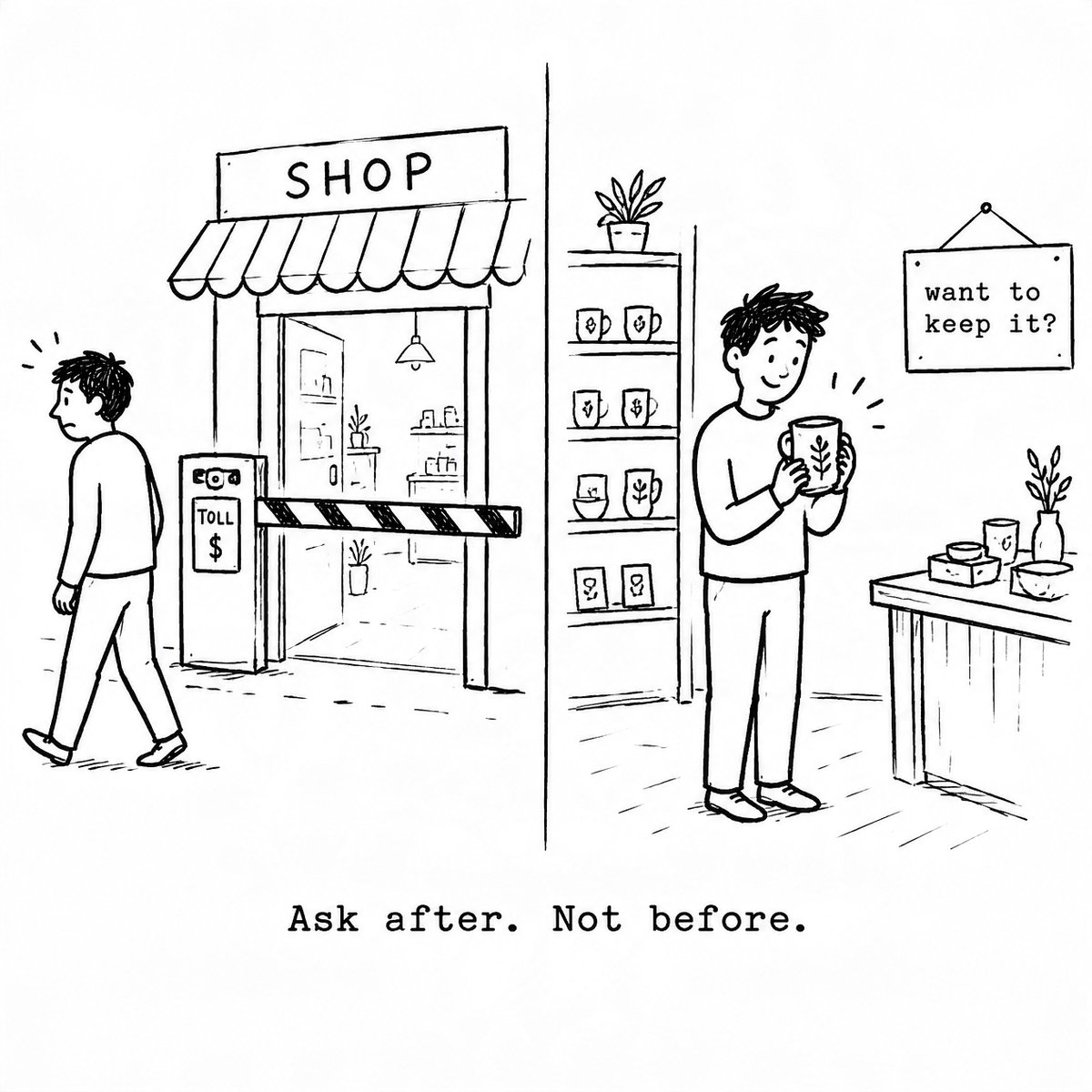
Two objections always come up. We need the email, and we need the account for security. The email one is usually fear in a strategy costume, because an address captured before value is an address that never opens anything. The security one is sometimes real, and then the job is to shrink the protected part until only the genuinely sensitive bit sits behind the wall.
This isn't an argument for shorter flows. At Kilo Health we made onboarding longer more than once, and conversion went up. The extra questions felt relevant, so people invested more in answering them and arrived at the product expecting more from it. A question about your goal is part of the value. A request for a rating is a toll. The test isn't how many screens there are. It's who each screen is for.
The one habit I'd add
Stop counting steps. Count asks, and sort them by who they serve. Anything that helps the person get their result — a goal, a preference, the context you need to personalise — stays, even if the flow gets longer. Anything that serves you — the review, the email, the permission you'll need later — moves to after they've received something.
Then make it weekly. Pick an hour, open your session recordings, and watch five new users go through onboarding without fixing anything while you watch. Note where they hesitate, where they skip, and where they leave. You'll learn more in that hour than from another rebuild.
The first week usually finds two asks that can move to after. By the third, you'll find one that never needed to exist.
If you have a flow in front of you right now, tell me one thing: which of your screens are there for your users, and which are there for you? If you can't tell, watch five recordings before you rebuild anything else.