At MentorCruise, we are all about making the most out of the experience of others. As part of that, we have connected and asked dozens of experts and professionals about their favourite Writing books – and here are the answers.

We have over 3,000 mentors available right now!
The best Writing books in 2026 are the ones working professionals actually recommend, not algorithmic picks. This list is curated from the bookshelves of Writing mentors on MentorCruise – every title vouched for by someone in the field. Browse the full book library or read on for our 2026 picks.
Understanding the concepts of Writing starts with understanding the fundamentals. On your way to mastery, it's crucial for you to understand how certain concepts were derived, and why things work like they do. Starting with these resources is the best way to do so.
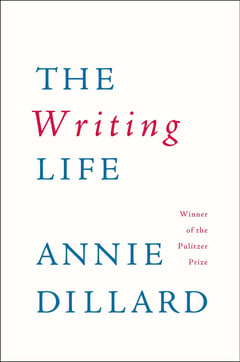
The writing life is the short story book which has seven chapters. It talks about how to become a good writer and how to create a good writing by passing through the perspective and personal experience of Annie Dillard.
Recommended by the experts and mentors at MentorCruise.
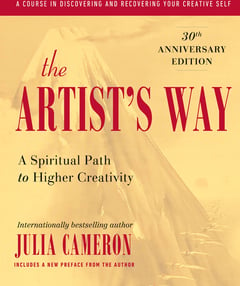
Since its first publication, The Artist's Way phenomena has inspired the genius of Elizabeth Gilbert and millions of readers to embark on a creative journey and find a deeper connection to process and purpose. Julia Cameron's novel approach guides readers in uncovering problems areas and pressure p…
Recommended by the experts and mentors at MentorCruise.
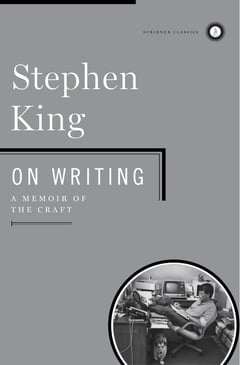
Immensely helpful and illuminating to any aspiring writer, this special edition of Stephen King’s critically lauded, million-copy bestseller shares the experiences, habits, and convictions that have shaped him and his work. “Long live the King” hailed Entertainment Weekly upon publication of Stephe…
Recommended by the experts and mentors at MentorCruise.
Five years and more than 100,000 copies after it was first published, it's hard to imagine anyone working in Web design who hasn't read Steve Krug's "instant classic" on Web usability, but people are still discovering it every day. In this second edition, Steve adds three new chapters in the same s…
Recommended by the experts and mentors at MentorCruise.
For decades, Lew Hunter's Screenwriting 434 class at UCLA has been the premier screenwriting course, launching a generation of the industry's most frequently produced writers. Here, he shares the secrets of his course on the screenwriting process by actually writing an original script, step by step…
Recommended by the experts and mentors at MentorCruise.
Long considered the bible for storytellers, Aristotle's Poetics is a fixture of college courses on everything from fiction writing to dramatic theory. Now Michael Tierno shows how this great work can be an invaluable resource to screenwriters or anyone interested in studying plot structure. In care…
Recommended by the experts and mentors at MentorCruise.
Get feedback on what you read from someone who does this for a living
These books are not required for you to learn Writing, but they are highly recommended for you to deepen your knowledge.
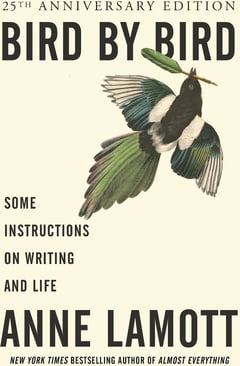
NEW YORK TIMES BESTSELLER • An essential volume for generations of writers young and old. The twenty-fifth anniversary edition of this modern classic will continue to spark creative minds for years to come. Anne Lamott is "a warm, generous, and hilarious guide through the writer’s world and its tre…
Recommended by the experts and mentors at MentorCruise.
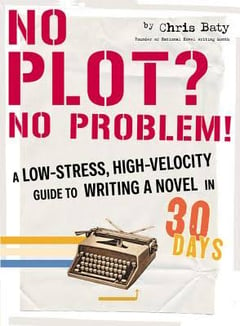
Let Chris Baty, founder of the rockin' literary marathon National Novel Writing Month (a.k.a. NaNoWriMo), guide you through four exciting weeks of hard-core noveling. Baty's pep talks and essential survival strategies cover the initial momentum and energy of Week One, the critical "plot flashes" of…
Recommended by the experts and mentors at MentorCruise.
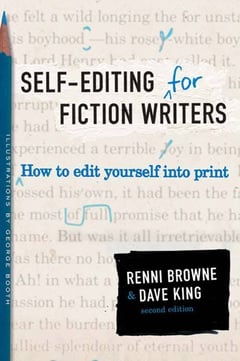
In this completely revised and updated second edition, Renni Browne and Dave King teach you, the writer, how to apply the editing techniques they have developed to your own work. Chapters on dialogue, exposition, point of view, interior monologue, and other techniques take you through the same proc…
Recommended by the experts and mentors at MentorCruise.
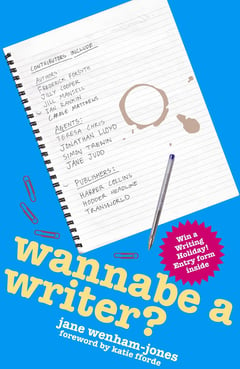
Wannabe a Writer? This hilarious, informative guide to getting into print, is a must-have for anyone who's ever thought they've got a book in them. Where do you start? How do you finish? And will anyone ever publish it when you have? Drawing on her own experiences as a novelist and journalist, Writ…
Recommended by the experts and mentors at MentorCruise.
Becoming a writer begins with a simple but important belief: You are a writer; you just need to write. In You Are a Writer, Jeff Goins shares his own story of self-doubt and what it took for him to become a professional writer and best-selling author—and the principles he’s learned from seeing many…
Recommended by the experts and mentors at MentorCruise.
For more than twenty years Natalie Goldberg has been challenging and cheering on writers with her books and workshops. In her groundbreaking first book, she brings together Zen meditation and writing in a new way. Writing practice, as she calls it, is no different from other forms of Zen practice —…
Recommended by the experts and mentors at MentorCruise.
This list is curated by MentorCruise and can include Amazon affiliate links. Have any other suggestions? Add here.
A Writing book that helped someone three years in won't necessarily help someone two months in. Pick by where you are, not by what's trending.
Identify the specific Writing problem in front of you this month – a stuck project, a missing fundamental, a decision you keep second-guessing. Then pick the book that maps to it. Books read in response to a real question stick. Books read in general don't.
If a Writing book has been on mentor recommendation lists for five years, it survived the parts of Writing that actually changed. Newer titles are useful for tools and tactics. Older ones tend to be where the durable thinking lives.
Foundational reads if you're new to Writing. Applied case studies and patterns once you've shipped real work. Frameworks for leading teams once you're managing other Writing people. The same book recommended at the wrong stage just becomes noise.
The hardest part of getting good at Writing isn't finding the right book – it's translating what you read into how you actually work. Most readers forget around 80% of what they read within a few weeks. The ones who don't are the ones who picked one specific idea per book and tried it on real work the next day.
That's where a Writing mentor closes the loop. A book can give you a framework. A mentor reads your real work and tells you where the gap is between what you think you're doing and what you're actually doing – the thing a book, by design, can't do.
A Writing book gives you the framework. But most readers forget around 80% of what they read within a few weeks.
A mentor closes the loop – they read your real work and tell you where the gap is between what you think you're doing and what you're actually doing.
Common questions about choosing and learning from Writing books in 2026.
The best Writing books for beginners cover the fundamentals before specialization. Start with the Fundamentals section on this page – those are the titles mentors most often hand to people who are new to Writing. Once you've worked through one or two, the Additional Reading and Specializations sections will deepen your knowledge.
Two or three carefully chosen Writing books, read closely and applied as you go, will take you further than a stack of ten skimmed. We recommend one fundamentals book to build your mental model, one practical book to ground it in real work, and one advanced book once you've shipped something.
Yes. Tools and frameworks change quickly, but the underlying principles of Writing – the mental models, trade-offs and judgement calls – move much more slowly. The books on this list focus on durable thinking, not version numbers, which is why mentors still recommend them in 2026.
You can get a long way on your own with the right books and projects, but most people hit a ceiling where a book can't tell you whether the choice you're about to make is reasonable for your specific situation. That's where a Writing mentor speeds things up – they look at your real work and tell you what a book can't.
Every book on this page is recommended by working Writing professionals on MentorCruise or curated by our editorial team from titles mentors consistently bring up. We re-check the list periodically and rotate in newer titles when the field moves – the 2026 edition reflects that.
Most Writing books cost $15 to $30 new, $10 to $15 as ebooks, and nothing if you borrow them from a local library. If you're working through several titles, a library hold list is the cheapest way to triage which ones are worth buying. The cost ceiling for a year of reading is well under the cost of one industry conference.
Three reasons usually: passive reading without notes, no system for picking one idea to actually try at work, and no one giving feedback on whether the attempt worked. Books on their own are an input. Without a practice loop and someone checking your work, what you read fades within weeks – which is what working with a Writing mentor fixes.
Four to six Writing books read closely and applied to your real work will outperform twenty skimmed. Career growth comes from the application, not the page count. Pair each book with one concrete experiment at work and one conversation with someone who already knows the material.


Most of what you read fades within weeks. A Writing mentor looks at your real work and tells you what a book can't.
Talk to a Writing mentorThere is no better source of accountability and motivation than having a personal mentor. What used to be impossible to find is now just two clicks away! All mentors are vetted & hands-on!
We've already delivered 1-on-1 mentorship to thousands of students, professionals, managers and executives. Even better, they've left an average rating of 4.9 out of 5 for our mentors.
Find a Writing mentor