

Product
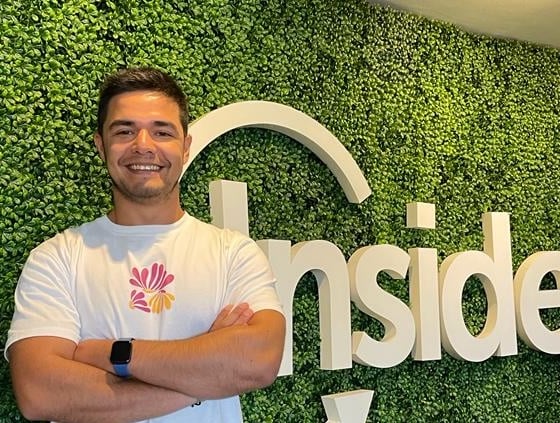
Bugra Kaya
Grew his product management career
You do not need another course. You need feedback on projects, applications, and interviews from someone who has hired juniors – and will tell you what is hireable versus what is tutorial residue.
Our mentors work at



























Engineers who have hired juniors or broken into tech the hard way. Open a few profiles, check price and open spots, and book free intros before you commit.
How it works
Direct feedback on your code, your story, and your search – week by week – from people who have hired juniors or made the same leap themselves.

Rick H.

Amal A.

Donovan L.
Rick Huang
Only 1 spot left
What you work on
The scoreboard is replies, onsite loops, and an offer – not certificates collected or tutorials completed. Mentorship cuts the loop that keeps juniors busy without getting hired.
Portfolio that proves judgment
Applications that get replies
Interview reps with someone who has run them
Outcomes
Mentees who used mentorship to break into tech and level up early – with projects and interviews that held up under real hiring scrutiny.
Product
Bugra Kaya
Grew his product management career
Product leadership
Sophie
Engineering to product leadership

UX Design
Bassma Hefni
Landed 3 job offers in Germany

Full-Stack
Peyton Lucas
Built a clearer approach to interviews

Data Science
Mauro Bandera
Data Scientist at Printify

Software Engineering
Michele Verriello
Software Engineer at Tesla
Self-taught and bootcamp paths create the same bottleneck: too much content, too little signal. You can finish another module, collect another certificate, and still not know whether a hiring manager would trust you with a ticket on day one. A mentor collapses that uncertainty. They help you pick portfolio work that shows judgment, rewrite applications so juniors look hireable, and practice interviews with someone who has sat on the other side of the table.
The currency that matters is not hours studied. It is projects a stranger can understand in two minutes, replies from real recruiters or hiring managers, screens you clear, and an offer you would take. Mentorship is built around those outcomes. Courses are built around completion. Both can be useful. Only one is accountable to whether you get hired.
MentorCruise mentors are practicing engineers and leaders, not career influencers selling a funnel. You see price and open spots on the Coding mentors page. You book a free intro. You work monthly on your actual code, story, and search – with async feedback between calls when the mentor offers it.
Prefer sessions in Spanish? See Spanish-speaking tech mentors. Already employed and aiming at the next level instead of a first offer? Try promotion coaching for software engineers.
Collecting certificates without shipping. Applying to hundreds of roles with the same resume. Studying algorithms in isolation without mock screens. Rebuilding the same todo app in a new framework because it feels like progress. Mentorship replaces that loop with weekly targets and review: finish this, cut that, send these three outreaches, debrief this screen.
You also stop outsourcing judgment to Twitter threads about “what juniors must know.” Markets differ. Teams differ. A mentor who has hired juniors in your stack can tell you which gaps are fatal for the roles you want and which ones are noise. That specificity is hard to get from a generic roadmap.
Days 1–7: intro call, ruthless portfolio audit, resume and LinkedIn pass, short list of role types or companies. Days 8–21: ship or cut projects, rewrite outreach, run applications that match the new story. Days 22–30: mock or real screens with written debriefs, adjust the plan based on what actually happened – not what a syllabus said should happen.
Not every month ends in an offer. Strong months end with clearer signal: you know which companies reply, which stories land, which technical gaps show up under pressure. That is how searches compound instead of resetting every Sunday night.
The path into code matters less than proof you can build and communicate. Bootcamp grads often have structure and recent projects, but shared project DNA that hiring managers recognize instantly. Self-taught developers often have curiosity and uneven gaps. CS grads often have theory and thin product instinct. Mentors meet you where you are – including career switchers leaving non-tech roles who need to translate domain experience into engineering signal.
If you are ashamed of your path, say so on the intro. Good mentors have heard it. They care whether you can ship and explain, not whether your origin story matches a LinkedIn aesthetic.
Look for people who have hired juniors, onboarded juniors, or landed a first role in a market like yours. Read a few reviews. Check that they have open spots. Book two or three free intros. Ask what they would cut from your portfolio this week. Ask how they run interview practice. If the answer is only “we will see,” try the next person.
Language, timezone, and stack matter, but attitude matters more at the start: you want someone who will tell you when work is not hireable yet, and who will celebrate when it is. Polite encouragement without standards is how people stay stuck for another year.
It will not guarantee an offer on a fixed date. It will not replace deliberate practice. It will not apply to jobs while you watch. It will replace the most expensive junior failure mode: looking busy for twelve months without producing the artifacts and interview performance that get offers.
One-off calls rarely move the needle. Our mentors work with you over weeks and months – helping you stay accountable, avoid mistakes, and build real confidence. Most mentees hit major milestones in just 3 months.


Mentee stories
“With his guidance and mentorship throughout the process, I was able to secure an offer from Google. He takes detailed notes and remembers everything we've talked about, which makes every meeting feel personalised.”

Moutasem
Software Engineer
“Ten months in, and I can say with full confidence that working with my mentor was one of the best investments I made in my development as a programmer. He never dumbed things down or made me comfortable in a way that kept me small.”

Nickolas
Software Engineer
“She helped me demystify what Staff-level impact looks like and turned our strategy sessions into a concrete action plan I've already begun executing with my manager.”

Dennis
Senior Machine Learning Engineer
“As a beginner trying to break into UX research, I sometimes struggle with impostor syndrome, and Emilia consistently approaches those moments with empathy and clarity. Her portfolio feedback has been especially impactful.”

Melissa
UX Researcher
Get started
Browse coding mentors or get matched. Every intro call is free.