Master your next Engineering interview with our comprehensive collection of questions and expert-crafted answers. Get prepared with real scenarios that top companies ask.






Prepare for your Engineering interview with proven strategies, practice questions, and personalized feedback from industry experts who've been in your shoes.
Thousands of mentors available
Flexible program structures
Free trial
Personal chats
1-on-1 calls
97% satisfaction rate
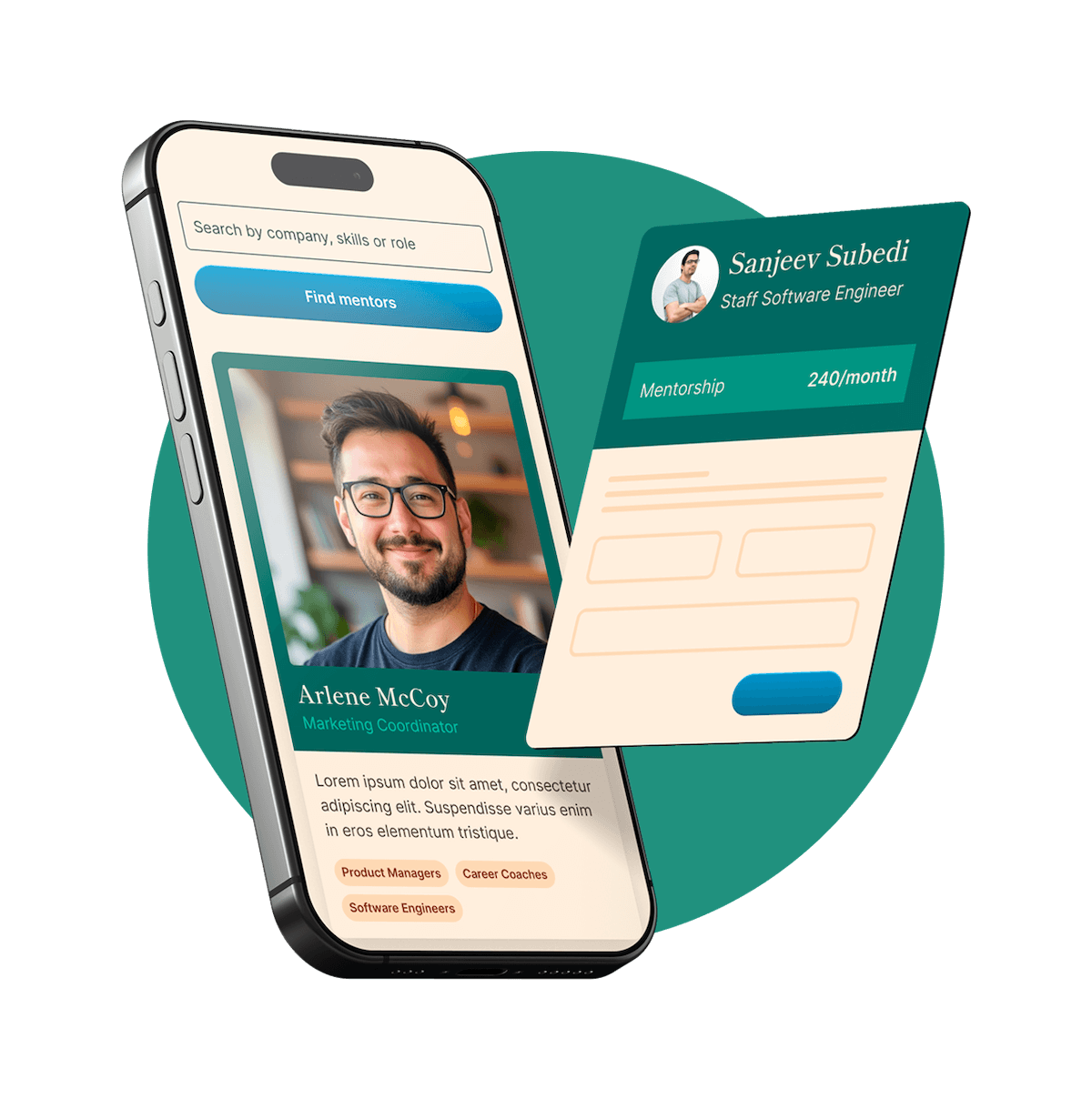
Choose your preferred way to study these interview questions
I’d answer this with a tight STAR arc, but keep it technical and outcome focused.
A recent project I led was building a real-time feature flag evaluation service to replace app-side config logic that had become slow and inconsistent. I started by defining the problem with product and platform teams, error rates, rollout delays, and lack of auditability. Then I wrote the design doc, proposed a stateless Go service backed by Redis plus a durable config store, and aligned teams on API contracts and migration steps.
I broke delivery into phases: core evaluator, admin APIs, observability, then gradual traffic migration. I ran weekly design reviews, delegated ownership across three engineers, and set clear SLOs. We shipped in eight weeks, cut flag evaluation latency by about 70 percent, reduced rollout incidents, and made rollbacks instant. The biggest challenge was migration risk, so we used shadow reads and side-by-side result comparison before full cutover.
I start by turning ambiguity into a list of assumptions, decisions, and unknowns. The goal is to reduce risk early, align stakeholders, then sequence the work so engineering can execute without constant churn.
Example, for an ambiguous “improve onboarding” request, I’d define activation metrics, map the funnel, identify bottlenecks, propose 2 or 3 changes, then stage delivery behind feature flags.
I optimize for change, not elegance. Early on, the goal is to capture the core business concepts clearly while keeping the schema easy to revise as the product learns.
In practice, I review the model with product and engineers often, watch which queries and features feel awkward, then harden the schema around proven patterns.
Try your first call for free with every mentor you're meeting. Cancel anytime, no questions asked.

I treat testing like a pyramid with feedback speed and risk coverage in mind. Most coverage should come from fast, deterministic unit tests, then a smaller set of integration tests for boundaries, a thin set of end-to-end tests for critical user journeys, and targeted load tests for performance risks.
I also tie strategy to risk. If payments are critical, I invest more in integration and E2E there than in low-impact features.
I start by making the consistency contract explicit, because “correct” depends on the business rule. Then I reduce the problem to shared state, ordering, and failure modes, and choose the lightest mechanism that preserves invariants.
Example: for order processing, I’d use an idempotency key, per-order serialization, and conditional updates so retries cannot create duplicate payments or invalid state transitions.
I’d answer this with a quick STAR structure: set the context, explain the tradeoff, show how you reduced risk, then quantify the outcome.
At a previous company, we were building a new event ingestion platform, but traffic projections and customer usage patterns were still fuzzy. The big decision was whether to go with a simple relational design first or invest in a Kafka-based event-driven architecture. I chose a modular middle path: keep the core service and data model simple, but introduce an event interface and async processing boundaries early. That let us avoid overengineering while preserving a clean migration path. To manage uncertainty, I documented assumptions, defined load thresholds that would trigger a redesign, and ran targeted load tests. Six months later, volume grew 4x, and we scaled by swapping in Kafka with minimal changes to upstream services.
I treat it like portfolio management, not a moral debate. The key is to quantify the cost of the debt and compare it to feature value in the same planning conversation.
If teams argue emotionally about debt, that usually means the tradeoffs are not visible enough.
I’d answer this with a tight STAR structure, then focus on metrics and tradeoffs.
At a previous company, I worked on an API that generated pricing results for our checkout flow, and p95 latency had climbed to about 1.8s during peak traffic. I first measured end to end latency, p50, p95, p99, DB query time, cache hit rate, CPU, and request fanout using tracing and dashboarding. The biggest issues were N+1 queries, repeated recomputation, and a chatty downstream service.
We fixed it by batching queries, adding a Redis cache for stable reference data, and replacing synchronous downstream calls with one aggregated request. I also added load tests to validate improvements before rollout. After the changes, p95 dropped to 420ms, DB load fell around 35%, and error rates during peak traffic decreased noticeably. The key was measuring before changing anything, so we optimized the real bottlenecks, not guesses.

Get personalized mentor recommendations based on your goals and experience level
Start matchingI think about reliability as preventing failure, and resiliency as recovering fast when failure still happens. The key is to design for partial failure from day one, not treat it as an edge case.
In practice, I also keep rollback simple, prefer gradual rollouts, and use postmortems to turn incidents into design improvements.
I’d answer this with a quick STAR structure: set up the legacy constraint, explain the tradeoff, show how you reduced risk, then quantify the outcome.
At a previous team, we needed to replace a legacy authentication service that used a brittle token format, but several internal clients depended on that exact behavior. Rewriting it outright would have broken older apps, so I introduced a compatibility layer. The new service supported the modern token model internally, while an adapter translated requests and responses for older consumers. I also versioned the API, added contract tests for legacy clients, and rolled traffic gradually with feature flags. That let us modernize security and improve performance without forcing a same-day migration. Over the next quarter, most clients moved to the new version, and we retired the adapter once adoption was high enough.
I’d frame it around three pillars, availability, resilience, and consistency, then tailor tradeoffs to the product’s SLA and business rules.
I think about it as observability that helps humans act fast, not just collect data.
I frame it around impact, reversibility, and cost of delay. Not every decision deserves the same quality bar, but every shortcut should be intentional and visible.
In practice, if a feature is time-sensitive, I might accept a simpler design, but I document the tradeoff, add tests around critical paths, and create a dated cleanup task so the debt does not become permanent.
I’d answer this with a quick STAR structure: original assumptions, what broke at scale, the redesign, and the measurable outcome.
At a previous company, I worked on an event ingestion pipeline that was built for about 5 million events a day, but usage grew to roughly 200 million. The original design used a single relational database for writes, aggregation, and querying, so we started seeing write contention, slow reports, and backlog during traffic spikes. I redesigned it into a decoupled pipeline using a message queue, stateless consumers, and separate OLTP and analytics stores. We also added idempotent processing, partitioning by tenant, and autoscaling based on lag. That cut peak processing latency from hours to minutes and let us scale horizontally without major rework.
I’d choose based on team shape, domain complexity, and how much independent scaling or release autonomy I actually need, not what feels most modern.
I’d answer this with a tight STAR story, focusing on impact, your actions, and what changed afterward.
At a previous team, we had a production incident where API latency spiked and checkout requests started timing out after a deployment. I was the on-call engineer, so I first acknowledged the incident, rolled back the release to stop the bleeding, and posted updates in our incident channel every 15 minutes. While traffic stabilized, I dug into logs and metrics and found a new database query causing table scans under peak load. I partnered with another engineer to add the missing index and validate the fix in staging before re-releasing. Afterward, I wrote the incident report, added a query performance check to CI, and helped create a safer canary rollout process.
I keep it structured and blameless. The goal is not “who broke it,” it’s “what conditions allowed this to happen, and how do we prevent it from recurring?”
Example: after a latency spike, the root cause was an unindexed query, but contributors were missing load tests and no slow-query alert.
I’d answer this with a quick STAR structure: set the context, explain how you spotted the risk, what you did, and the outcome.
At a previous team, we were close to launching a new event-driven billing workflow. Everyone was focused on feature completeness, but while reviewing retry behavior I noticed our consumer was not idempotent. Under normal conditions it worked fine, but if the message broker redelivered events, we could double-charge customers. That risk had been missed because tests only covered happy paths. I raised it early, reproduced it in staging, and proposed adding idempotency keys plus a deduplication store. We delayed launch by a few days, but avoided a potentially serious production incident and added failure-mode reviews to our release process.
I design APIs assuming change is inevitable, so I optimize for compatibility, clear contracts, and observability from day one.
In practice, I also review APIs from the client’s perspective, because an elegant backend design can still be painful to integrate.
I’d answer this with a quick STAR structure: situation, the wrong assumption, how I detected it, then what I changed and learned.
At a previous team, I initially pushed to speed up a slow reporting API by adding aggressive caching at the service layer. It seemed obvious, because the endpoint was read-heavy. After rollout, latency improved a bit, but data freshness complaints spiked and database load barely moved. I realized my approach was wrong when I looked deeper at tracing and query plans, the real issue was one expensive join and missing indexes, not repeated computation in the app. I owned that quickly, rolled back the cache policy, partnered with a DBA, rewrote the query, added the right indexes, and cut response time by about 70 percent. The key lesson was to validate with profiling before optimizing.
I’d answer this with a tight STAR structure, focus on conflicting goals, then show how I created clarity and momentum.
At my last company, I worked on a billing migration involving engineering, finance, support, and sales ops. Alignment was hard because each team defined success differently, engineering wanted to reduce technical debt, finance cared about auditability, and support wanted fewer customer tickets. I pulled everyone into a working session, mapped decisions by owner, and turned vague concerns into a simple decision log with tradeoffs and deadlines. Then I proposed a phased rollout so no team had to accept all the risk at once. That changed the conversation from opinions to measurable impact. We launched in two phases, cut billing-related tickets by about 30 percent, and closed month-end reconciliation faster.
I treat documentation as part of the product, not cleanup work after the fact. My rule is simple: write for the next engineer under time pressure, which is often future me. I focus on docs that reduce repeated questions, speed up onboarding, and make decisions easy to revisit.
A good example is after a noisy incident, I wrote a runbook and rollback guide, then used it in onboarding. Support requests dropped a lot.
I’d answer this with a quick STAR structure: situation, warning signs, actions, result, then the lesson.
At a prior team, we were rebuilding a reporting pipeline and committed to an aggressive launch date. Early warning signs showed up fast: requirements were still changing, integration issues kept getting labeled "edge cases," and our burndown looked fine only because stories were being split too small. I flagged the risk, but not strongly enough, and we kept optimizing for the date instead of scope. We slipped by about three weeks.
What I learned was to treat ambiguity, repeated rework, and artificial progress metrics as real schedule risks. Since then, I push for explicit risk reviews, clearer exit criteria, and earlier conversations about de-scoping. The big lesson was that projects rarely fail suddenly, they usually fail gradually while the team explains away the signals.
I review code with two goals in mind, ship safer software and help the team level up. My approach is to separate must-fix issues from coaching comments, so reviews stay clear and constructive.
If I see a recurring pattern, I turn it into a team guideline, example PR, or short knowledge share.
I’d answer this with a quick STAR structure, focusing on ambiguity, your debugging process, and the measurable outcome.
One example: we had an intermittent data corruption bug in a distributed service where user profile updates would occasionally revert fields. It was difficult because logs looked normal, it only happened under production-like concurrency, and multiple services touched the same record. I isolated it by narrowing scope step by step: first, I added request correlation IDs and compared successful vs failed update paths. Then I reproduced it in staging with synthetic concurrent traffic. That showed two writes racing, one using stale cached data and overwriting a newer version. The fix was optimistic locking plus tightening cache invalidation. After rollout, the issue disappeared and we added race-condition tests and better tracing so similar bugs were easier to catch.
Common bottlenecks usually come from a few places:
I identify them by starting with symptoms and measuring before guessing. Check latency, throughput, error rate, and resource utilization. Use the USE method, utilization, saturation, errors, for each resource, or RED for services, rate, errors, duration. Then drill down with profiling, tracing, database query analysis, flame graphs, queue metrics, and load tests. The key is finding the constrained resource and proving it improves when changed.
I think about caching as a tradeoff between latency, cost, and correctness. The rule is, cache data that is expensive to compute or fetch, read often, and can tolerate some staleness.
In practice, I start small, cache one painful path, define freshness requirements, then add observability so I can tune without guessing.
I design observability around the questions engineers will ask during an incident: Is it broken, who is affected, where is it failing, and what changed?
For example, on a payment service, we correlated trace IDs across API, worker, and DB layers, which cut triage time because engineers could isolate whether failures came from the gateway, queue backlog, or a slow query fast.
I treat uncertain estimates as a risk management exercise, not a precision exercise. The goal is to make uncertainty visible, shrink it quickly, and give stakeholders a range with clear assumptions.
For example, on an integration project with vague third-party API behavior, I gave a 2 to 6 week range, ran a 3 day spike, found auth and rate-limit issues early, then narrowed the plan to 4 weeks with much higher confidence.
I’d answer this with a quick STAR structure, focus on how you built credibility, aligned incentives, and made the safer choice feel like the obvious one.
At a previous team, we were debating whether to ship a new feature by adding logic into an already overloaded service. I wasn’t the tech lead, but I was concerned it would increase latency and make future changes harder. I pulled production metrics, mapped the likely failure modes, and built a small spike showing an alternative using an event-driven component. Instead of arguing in abstract terms, I framed it around the team’s goals: faster delivery now, fewer incidents later. I shared the tradeoffs in a design review, invited objections, and incorporated feedback. The team adopted the new approach, and we shipped on time with better performance and fewer operational issues afterward.
I’d answer this with a quick STAR structure: situation, what made it hard, what I actually did, and the measurable outcome.
At my last team, I inherited a payments service that had grown over several years, with weak docs and a lot of implicit business rules. I needed to add refund support without breaking existing flows. First, I mapped the codebase by tracing one request end to end, reading tests, and documenting module responsibilities as I went. Then I added logging in a lower environment and paired with a senior teammate who knew some of the history. I found that the real complexity was not the code style, it was hidden side effects between the ledger and notification jobs. I wrote characterization tests before changing behavior, shipped in small increments, and we launched refunds with no production incidents. That process also left behind diagrams and runbooks the team kept using.
I treat it as defense in depth, reduce attack surface, harden defaults, and assume something will fail.
I’d answer this with a quick STAR: give the constraint, the tradeoff, what you changed in the design, and the measurable outcome.
At a health-tech company, we were building an event-driven analytics pipeline for patient engagement data. Originally, the plan was to centralize raw events in a shared data lake, but HIPAA and internal privacy rules made that risky because the payloads contained indirect identifiers. I redesigned it so PHI stayed in a restricted boundary, events were tokenized before leaving the source domain, and downstream consumers only saw the minimum necessary fields. We added field-level encryption, short retention policies, audit logging, and role-based access with break-glass procedures. That increased implementation time by about two sprints, but it let us pass compliance review, reduce blast radius, and still deliver near real-time reporting for product teams.
I’d answer this with a quick STAR structure: name the risk, what you changed, how you rolled it out, and the measurable result.
At a previous team, releases were high stress because we deployed all services at once, with limited rollback confidence. I introduced three things: feature flags for risky code paths, a staged rollout starting with internal traffic, and automated pre-deploy checks for schema compatibility and smoke tests. I also added a one-click rollback playbook and better dashboards for error rate and latency during deploys. We tested the process on smaller services first, then standardized it. Within a couple of months, failed releases dropped a lot, rollback time went from about 20 minutes to under 5, and the team was comfortable deploying more frequently with much less drama.
I’d answer this with a quick STAR structure, then focus on how you balanced business urgency with delivery risk.
At a previous team, a sales stakeholder wanted us to commit to a two week launch for a customer facing integration. After digging in, I saw the timeline ignored security review, QA, and a dependency on another team. I pushed back by framing it around risk, not opinion: if we shipped in two weeks, we could create customer data issues and miss contractual expectations anyway. I came with options, not just a no, a reduced scope MVP in two weeks, or the full solution in five. We aligned on the MVP, launched on time, and followed with the remaining work later. The key was being direct, data driven, and offering a path forward.
I keep it anchored to impact first, then add just enough technical detail to support the decision. A simple way to answer is: audience, translation, confirmation.
Example: I explained API rate limiting to a sales team as “a fair-use guardrail that keeps one customer from slowing everyone else down,” then tied it to customer experience, contract expectations, and what they should tell clients.
I handle it by separating the person from the problem, then getting concrete fast. My goal is not to win the argument, it is to make the best decision for the team and product.
For example, I once disagreed on building a custom service versus extending an existing one. We did a one day spike, compared complexity and operational cost, and chose the simpler extension.
I’d answer this with a quick STAR structure: name the bottleneck, quantify the impact, explain the change, then show the result.
At one team, our PR review process was slowing everything down. Small changes sat for days because every PR needed two senior reviewers, and there wasn’t a clear SLA. I pulled data from GitHub and showed median review time was about 2.5 days, which was blocking releases. I proposed a lighter process: one required reviewer for low risk changes, a #reviews Slack rotation, and a rule that PRs under a certain size should be reviewed within 4 business hours. I also added a simple PR template so context was clearer. Within about a month, review time dropped to under a day, deploy frequency improved, and engineers felt less stuck waiting on approvals.
I balance it by making mentoring part of delivery, not something separate. The goal is to unblock people in a way that scales, while staying clear on what I personally own.
For example, I helped a new engineer own a service migration. I set milestones, reviewed their design early, and reserved twice-weekly syncs. They delivered successfully, and I still hit my own project deadline because the support was structured.
A solid way to answer this is: name the feedback, show how you changed your behavior, then tie it to better engineering outcomes.
Early on, a manager told me, “You jump to implementation too fast.” I was solving problems quickly, but I was not always aligning on requirements, risks, or rollout plans first. After that, I started writing short design notes before coding, even for medium-sized changes, and I got more deliberate about asking clarifying questions up front.
That changed a lot. My projects had fewer midstream reversals, reviews got faster because context was clear, and cross-functional partners felt more included. It also made me a better senior engineer, because I was not just shipping code, I was reducing ambiguity for everyone else.
I triage on impact, urgency, and reversibility. The goal is to handle the issue with the biggest business or customer risk first, while creating enough structure that nothing gets lost.
For example, if production is down while an internal tool is failing, I stabilize production first, assign someone to gather details on the internal issue, then return to it once customer impact is contained.
I’d answer this with a quick STAR structure, focus on tradeoffs, how I brought people along, and the measurable outcome.
At a previous team, we had a release planned, but I pushed to delay it because our service was showing intermittent data consistency issues under load. It was unpopular because product wanted the date, and engineers felt the issue was edge-casey. I pulled together logs, failure rates, and a simple risk analysis showing customer impact if we shipped. Then I proposed a tighter plan: pause the launch for one sprint, add idempotency protections, fix the retry logic, and run load tests. We did slip the date, but the launch was stable, support tickets stayed low, and afterward the team agreed the delay was the right call. The key was being decisive, transparent, and data-driven, not just opinionated.
I look for improvement at three levels, outcomes first, then leading indicators, then qualitative signals. The key is comparing against a stable baseline, not vibes.
Example: if deploys went from weekly to daily, MTTR dropped 40%, and engineers report fewer handoff delays, that is real improvement. If velocity rises but defects and pager noise rise too, it is probably just local optimization.
I treat build-versus-buy as a leverage and risk decision, not just a cost decision. My default is, buy for commodity capabilities, build where it creates differentiation, control, or a better developer experience that materially affects velocity.
Example, for CI observability I’d buy. For a deployment platform tightly tied to our architecture and workflows, I’d lean build or heavily extend.
I’d answer this with a quick STAR structure: state the assumption, explain the data you gathered, show how you influenced the decision, then quantify the outcome.
At a SaaS company, leadership believed our onboarding drop-off was mostly caused by UI confusion, so the plan was a full redesign. I pulled funnel data, session recordings, and support tickets, and found the biggest drop happened after email domain verification, especially for enterprise users with stricter IT policies. The assumption was a design problem, but the data showed it was really a technical and process issue.
I presented the findings with a simple cohort analysis and estimated impact. Instead of a full redesign, we prioritized SSO guidance, clearer verification messaging, and an admin bypass flow. Activation improved by 18 percent in six weeks, and we avoided spending a quarter on the wrong solution.
I treat capacity planning and cost optimization as one loop, not two separate tasks. The goal is to meet SLOs with enough headroom for spikes, while avoiding paying for idle capacity.
In practice, I’ve used load tests plus production metrics to set baselines, then cut spend by moving stable services to savings plans and tuning overprovisioned databases.
I’d do it in layers: understand the business first, then the system, then the workflow, then contribute with small wins.
I handle this with explicit contracts, not assumptions. The goal is to make ownership visible, measurable, and easy to escalate when something falls between teams.
In practice, I’ve prevented gaps by writing a one-page interface agreement between teams, then reviewing incidents against it and updating ownership where reality differed from the org chart.
I’d answer this with a quick STAR structure, focusing on how I reduced risk, aligned people fast, and changed the plan without losing momentum.
At a previous team, we were two weeks from launching a reporting feature when compliance said we could no longer store part of the customer data we were using for precomputed dashboards. Technically, I split the solution into a short term and long term path. Short term, we moved that logic to on-demand queries, added caching, and tightened indexes so performance stayed acceptable. Operationally, I pulled product, QA, and compliance into a same-day decision review, re-scoped the release, and updated the test plan and rollout checklist. We shipped a narrower version on time, then followed with a safer architecture the next sprint.
I’d answer this with a quick STAR structure: what the problem was, what I personally drove, what changed, and why it mattered.
One accomplishment I’m most proud of was leading a reliability overhaul for a high-traffic internal API that was causing frequent incidents. I traced the biggest failure modes to retry storms, poor observability, and a fragile deployment path. I introduced idempotent request handling, better circuit breaking, and meaningful service-level dashboards, then worked with the team to tighten rollout safety. Over about a quarter, we cut incident volume by more than half and reduced recovery time significantly. I’m proud of it because it wasn’t just a technical fix, it changed how the team built and operated services, and the impact lasted well beyond the initial project.
I do my best work on messy, high-impact backend and platform problems where the requirements are evolving, but reliability still matters. I’m strong at breaking ambiguous goals into clear technical steps, aligning with stakeholders, and driving toward something practical. A good example is designing APIs, improving service performance, or untangling operational pain points with better observability and automation. I also tend to do well in spaces where I can mentor others while still staying hands-on.
Where I’m still growing is at the edges of my experience. I’m very comfortable going deep technically, but I’ve been intentionally getting better at thinking more in terms of long-term business tradeoffs, not just elegant engineering. I’m also continuing to level up in large-scale system design, especially around making the right simplifications early, so teams can move faster without overbuilding.
Knowing the questions is just the start. Work with experienced professionals who can help you perfect your answers, improve your presentation, and boost your confidence.
Comprehensive support to help you succeed at every stage of your interview journey
We've already delivered 1-on-1 mentorship to thousands of students, professionals, managers and executives. Even better, they've left an average rating of 4.9 out of 5 for our mentors.
Find Engineering Interview Coaches
