At MentorCruise, we are all about making the most out of the experience of others. As part of that, we have connected and asked dozens of experts and professionals about their favourite Programming books – and here are the answers.


We have over 3,000 mentors available right now!
The best Programming books in 2026 are the ones working professionals actually recommend, not algorithmic picks. This list is curated from the bookshelves of Programming mentors on MentorCruise – every title vouched for by someone in the field. Browse the full book library or read on for our 2026 picks.
Understanding the concepts of Programming starts with understanding the fundamentals. On your way to mastery, it's crucial for you to understand how certain concepts were derived, and why things work like they do. Starting with these resources is the best way to do so.
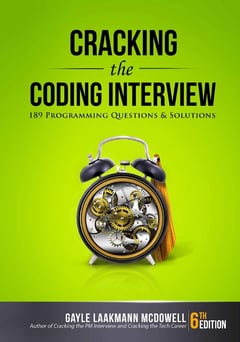
"Cracking the Coding Interview" presents problems requiring versatile reasoning and proposes multiple solution approaches. It encourages readers to develop multiple solutions for each problem. The book provides explanations, example problems, and solutions to solve coding interview questions relate…
Recommended by the experts and mentors at MentorCruise.
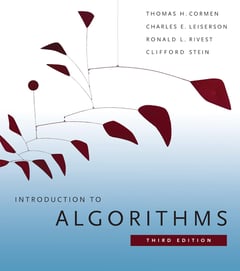
Introduction to Algorithms uniquely combines rigor and comprehensiveness. It covers a broad range of algorithms in depth, yet makes their design and analysis accessible to all levels of readers, with self-contained chapters and algorithms in pseudocode.
Recommended by the experts and mentors at MentorCruise.
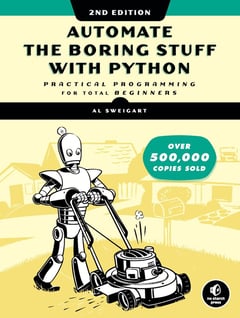
This new, fully revised edition of Al Sweigart's bestselling Pythonic classic, Automate the Boring Stuff with Python , covers all the basics of Python 3 while exploring its rich library of modules for performing specific tasks, like scraping data off the Web, filling out forms, renaming files, orga…
Recommended by the experts and mentors at MentorCruise.
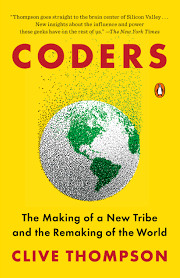
From acclaimed tech writer Clive Thompson comes a brilliant anthropological reckoning with the most powerful tribe in the world today, computer programmers, in a book that interrogates who they are, how they think, what qualifies as greatness in their world, and what should give us pause.
Recommended by the experts and mentors at MentorCruise.
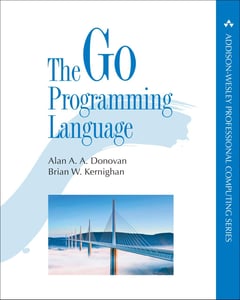
What is the Go or Golang programming language? Go, also called Golang or Go language, is an Open Source programming language that Google developed. Software developers use Go in an array of operating systems and frameworks to develop web applications, cloud and networking services, and other types …
Recommended by the experts and mentors at MentorCruise.
The Art of Computer Programming (TAOCP) is a comprehensive monograph written by the computer scientist Donald Knuth presenting programming algorithms and their analysis. Volumes 1–5 are intended to represent the central core of computer programming for sequential machines.
Recommended by the experts and mentors at MentorCruise.
Get feedback on what you read from someone who does this for a living
These books are not required for you to learn Programming, but they are highly recommended for you to deepen your knowledge.
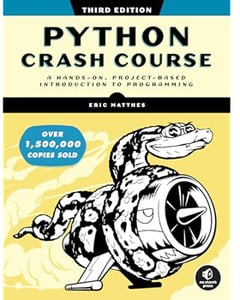
Python Crash Course is the world’s bestselling programming book, with over 1,500,000 copies sold to date!
Python Crash Course is the world’s best-selling guide to the Python programming language. This fast-paced, thorough introduction will have you writing programs, solving problems, and developing…
Recommended by the experts and mentors at MentorCruise.
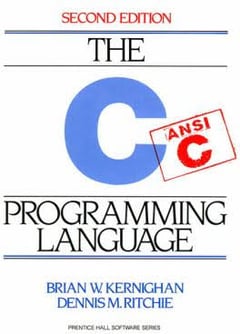
The C programming language is a general-purpose, operating system-agnostic, and procedural language that supports structured programming and provides low-level access to the system memory.
Recommended by the experts and mentors at MentorCruise.
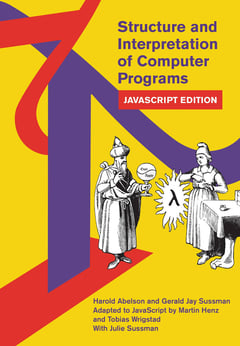
A new version of the classic and widely used text adapted for the JavaScript programming language. Since the publication of its first edition in 1984 and its second edition in 1996, Structure and Interpretation of Computer Programs (SICP) has influenced computer science curricula around the world.
Recommended by the experts and mentors at MentorCruise.
Since this Jolt-award winning classic was last updated in 2008, the Java programming environment has changed dramatically. Java 7 and Java 8 introduced new features and functions including, forEach() method in Iterable interface, default and static methods in Interfaces, Functional Interfaces and L…
Recommended by the experts and mentors at MentorCruise.
From a New York Times bestselling author and investigative journalist comes The Social Network for the video game industry, a riveting examination of Blizzard Entertainment's rise and shocking downfall.
For video game fans, the name Blizzard Entertainment was once synonymous with perfection. The re…
Recommended by the experts and mentors at MentorCruise.
Widely considered one of the best practical guides to programming, Steve McConnell’s original code complete has been helping developers write better software for more than a decade. Now this classic book has been fully updated and revised with leading-edge practices—and hundreds of new code samples…
Recommended by the experts and mentors at MentorCruise.
You've got your basics in order – time to move on to some advanced and specialized concepts. Programming is evolving every day, these books can help you master it.
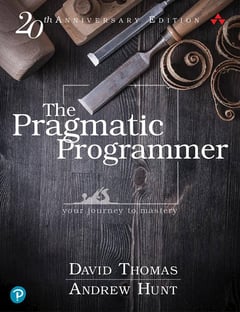
Written as a series of self-contained sections and filled with classic and fresh anecdotes, thoughtful examples, and interesting analogies, The Pragmatic Programmer illustrates the best approaches and major pitfalls of many different aspects of software development.
Recommended by the experts and mentors at MentorCruise.
This list is curated by MentorCruise and can include Amazon affiliate links. Have any other suggestions? Add here.
A Programming book that helped someone three years in won't necessarily help someone two months in. Pick by where you are, not by what's trending.
Identify the specific Programming problem in front of you this month – a stuck project, a missing fundamental, a decision you keep second-guessing. Then pick the book that maps to it. Books read in response to a real question stick. Books read in general don't.
If a Programming book has been on mentor recommendation lists for five years, it survived the parts of Programming that actually changed. Newer titles are useful for tools and tactics. Older ones tend to be where the durable thinking lives.
Foundational reads if you're new to Programming. Applied case studies and patterns once you've shipped real work. Frameworks for leading teams once you're managing other Programming people. The same book recommended at the wrong stage just becomes noise.
The hardest part of getting good at Programming isn't finding the right book – it's translating what you read into how you actually work. Most readers forget around 80% of what they read within a few weeks. The ones who don't are the ones who picked one specific idea per book and tried it on real work the next day.
That's where a Programming mentor closes the loop. A book can give you a framework. A mentor reads your real work and tells you where the gap is between what you think you're doing and what you're actually doing – the thing a book, by design, can't do.
A Programming book gives you the framework. But most readers forget around 80% of what they read within a few weeks.
A mentor closes the loop – they read your real work and tell you where the gap is between what you think you're doing and what you're actually doing.
Common questions about choosing and learning from Programming books in 2026.
The best Programming books for beginners cover the fundamentals before specialization. Start with the Fundamentals section on this page – those are the titles mentors most often hand to people who are new to Programming. Once you've worked through one or two, the Additional Reading and Specializations sections will deepen your knowledge.
Two or three carefully chosen Programming books, read closely and applied as you go, will take you further than a stack of ten skimmed. We recommend one fundamentals book to build your mental model, one practical book to ground it in real work, and one advanced book once you've shipped something.
Yes. Tools and frameworks change quickly, but the underlying principles of Programming – the mental models, trade-offs and judgement calls – move much more slowly. The books on this list focus on durable thinking, not version numbers, which is why mentors still recommend them in 2026.
You can get a long way on your own with the right books and projects, but most people hit a ceiling where a book can't tell you whether the choice you're about to make is reasonable for your specific situation. That's where a Programming mentor speeds things up – they look at your real work and tell you what a book can't.
Every book on this page is recommended by working Programming professionals on MentorCruise or curated by our editorial team from titles mentors consistently bring up. We re-check the list periodically and rotate in newer titles when the field moves – the 2026 edition reflects that.
Most Programming books cost $15 to $30 new, $10 to $15 as ebooks, and nothing if you borrow them from a local library. If you're working through several titles, a library hold list is the cheapest way to triage which ones are worth buying. The cost ceiling for a year of reading is well under the cost of one industry conference.
Three reasons usually: passive reading without notes, no system for picking one idea to actually try at work, and no one giving feedback on whether the attempt worked. Books on their own are an input. Without a practice loop and someone checking your work, what you read fades within weeks – which is what working with a Programming mentor fixes.
Four to six Programming books read closely and applied to your real work will outperform twenty skimmed. Career growth comes from the application, not the page count. Pair each book with one concrete experiment at work and one conversation with someone who already knows the material.


Most of what you read fades within weeks. A Programming mentor looks at your real work and tells you what a book can't.
Talk to a Programming mentorThere is no better source of accountability and motivation than having a personal mentor. What used to be impossible to find is now just two clicks away! All mentors are vetted & hands-on!
We've already delivered 1-on-1 mentorship to thousands of students, professionals, managers and executives. Even better, they've left an average rating of 4.9 out of 5 for our mentors.
Find a Programming mentor