At MentorCruise, we are all about making the most out of the experience of others. As part of that, we have connected and asked dozens of experts and professionals about their favourite Productivity books – and here are the answers.


We have over 3,000 mentors available right now!
The best Productivity books in 2026 are the ones working professionals actually recommend, not algorithmic picks. This list is curated from the bookshelves of Productivity mentors on MentorCruise – every title vouched for by someone in the field. Browse the full book library or read on for our 2026 picks.
Understanding the concepts of Productivity starts with understanding the fundamentals. On your way to mastery, it's crucial for you to understand how certain concepts were derived, and why things work like they do. Starting with these resources is the best way to do so.
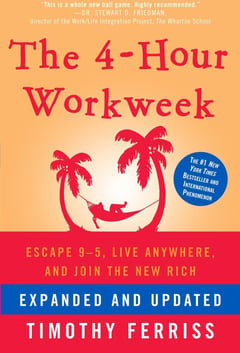
The 4-Hour Work Week is all about how to change the way readers look at how they live and work and why they should challenge old assumptions. The author writes from a unique vantage point. He created a life and a career he chose out of consistently questioning the traditional assumptions about life…
Recommended by the experts and mentors at MentorCruise.
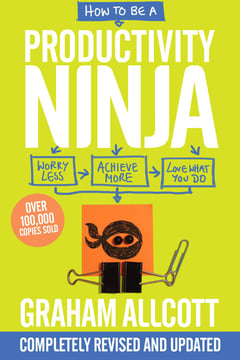
How to Be a Productivity Ninja by Graham Allcott gives practical, easy-to-implement tips to improve your productivity and reduce stress. It helps readers to become more efficient and organized in both their personal and professional lives.
Recommended by the experts and mentors at MentorCruise.
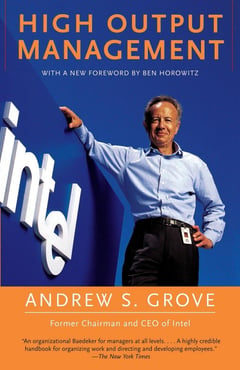
A topic covered in High Output Management is for managers to choose Key Performance Indicators to help their team achieve results. Managers are responsible for ensuring their teams have KPIs linked to the company OKRs. Managers can also create both team and individual KPIs to measure what gets done.
Recommended by the experts and mentors at MentorCruise.
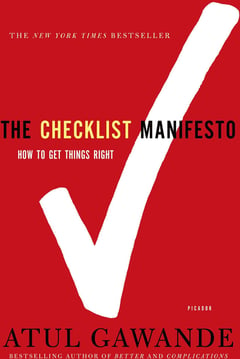
What is The Checklist Manifesto about? Drawing from his experience as a general surgeon, Atul Gawande's The Checklist Manifesto (2009) reveals startling evidence on how using a simple checklist can significantly reduce human error in complex professions such as aviation, engineering and medicine.
Recommended by the experts and mentors at MentorCruise.
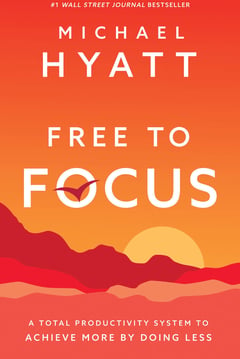
"Free to Focus" by Michael Hyatt is a productivity book that helps readers identify and eliminate distractions in order to focus on meaningful work. It offers practical advice and tools for achieving greater efficiency and effectiveness in both work and life.
Recommended by the experts and mentors at MentorCruise.
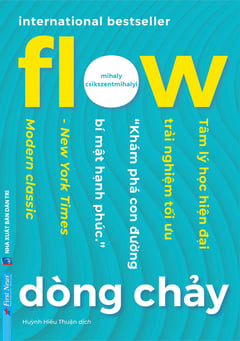
What is Flow about? Flow (1990) explores how we can experience enjoyment in our lives by controlling our attention and strengthening our resolve. This is achieved by being immersed in an activity or subject that makes us neither anxious (if it's too hard), nor bored (if it's too easy).
Recommended by the experts and mentors at MentorCruise.
Get feedback on what you read from someone who does this for a living
These books are not required for you to learn Productivity, but they are highly recommended for you to deepen your knowledge.
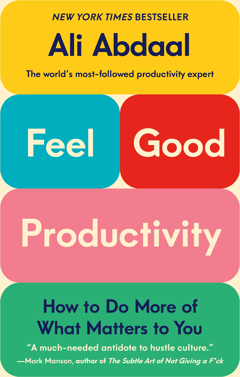
Feel-Good Productivity (2021) by Ali Abdaal is a book that explores how to maximize productivity without sacrificing happiness and well-being.
Recommended by the experts and mentors at MentorCruise.
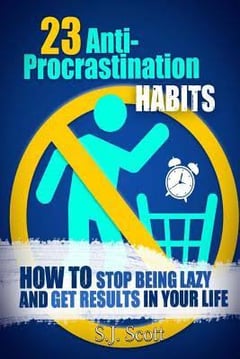
In the book "23 Anti-Procrastination Habits", you will discover a catalog of ideas to help you overcome procrastination on a daily basis. Whereas many books provide a simple list of tips, you'll learn why a specific strategy works, what limiting belief it eliminates and how it can be immediately ap…
Recommended by the experts and mentors at MentorCruise.
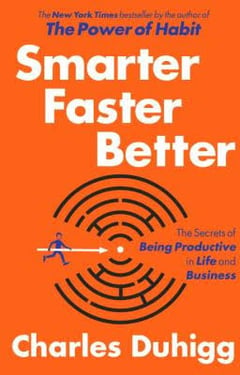
Smarter Faster Better is a story-filled exploration of the science of productivity, one that can help us learn to succeed with less stress and struggle—and become smarter, faster, and better at everything we do.
Recommended by the experts and mentors at MentorCruise.
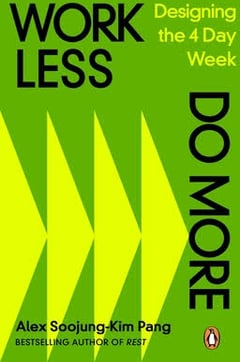
A must read for anyone interested in the 4-day week' - Heejung Chung, professor at the University of Kent and author of The Flexibility Paradox'This invaluable book offers a clear way we don't need to burn ourselves out, we can work less and get more done' - Rebecca Seal, author of How To Work Alon…
Recommended by the experts and mentors at MentorCruise.
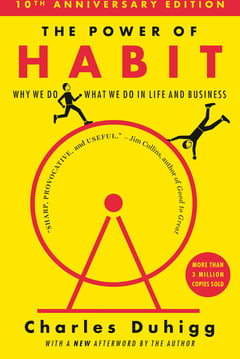
The Power of Habit (2012) unveils the science behind habit formation and change, making it a valuable read. Key highlights include: The book uncovers the psychology and neuroscience behind our daily routines. It presents practical strategies for replacing bad habits with positive ones.
Recommended by the experts and mentors at MentorCruise.
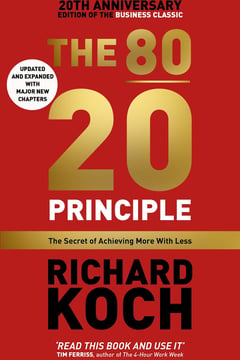
The Pareto principle states that for many outcomes, roughly 80% of consequences come from 20% of causes. In other words, a small percentage of causes have an outsized effect. This concept is important to understand because it can help you identify which initiatives to prioritize so you can make the…
Recommended by the experts and mentors at MentorCruise.
This list is curated by MentorCruise and can include Amazon affiliate links. Have any other suggestions? Add here.
A Productivity book that helped someone three years in won't necessarily help someone two months in. Pick by where you are, not by what's trending.
Identify the specific Productivity problem in front of you this month – a stuck project, a missing fundamental, a decision you keep second-guessing. Then pick the book that maps to it. Books read in response to a real question stick. Books read in general don't.
If a Productivity book has been on mentor recommendation lists for five years, it survived the parts of Productivity that actually changed. Newer titles are useful for tools and tactics. Older ones tend to be where the durable thinking lives.
Foundational reads if you're new to Productivity. Applied case studies and patterns once you've shipped real work. Frameworks for leading teams once you're managing other Productivity people. The same book recommended at the wrong stage just becomes noise.
The hardest part of getting good at Productivity isn't finding the right book – it's translating what you read into how you actually work. Most readers forget around 80% of what they read within a few weeks. The ones who don't are the ones who picked one specific idea per book and tried it on real work the next day.
That's where a Productivity mentor closes the loop. A book can give you a framework. A mentor reads your real work and tells you where the gap is between what you think you're doing and what you're actually doing – the thing a book, by design, can't do.
A Productivity book gives you the framework. But most readers forget around 80% of what they read within a few weeks.
A mentor closes the loop – they read your real work and tell you where the gap is between what you think you're doing and what you're actually doing.
Common questions about choosing and learning from Productivity books in 2026.
The best Productivity books for beginners cover the fundamentals before specialization. Start with the Fundamentals section on this page – those are the titles mentors most often hand to people who are new to Productivity. Once you've worked through one or two, the Additional Reading and Specializations sections will deepen your knowledge.
Two or three carefully chosen Productivity books, read closely and applied as you go, will take you further than a stack of ten skimmed. We recommend one fundamentals book to build your mental model, one practical book to ground it in real work, and one advanced book once you've shipped something.
Yes. Tools and frameworks change quickly, but the underlying principles of Productivity – the mental models, trade-offs and judgement calls – move much more slowly. The books on this list focus on durable thinking, not version numbers, which is why mentors still recommend them in 2026.
You can get a long way on your own with the right books and projects, but most people hit a ceiling where a book can't tell you whether the choice you're about to make is reasonable for your specific situation. That's where a Productivity mentor speeds things up – they look at your real work and tell you what a book can't.
Every book on this page is recommended by working Productivity professionals on MentorCruise or curated by our editorial team from titles mentors consistently bring up. We re-check the list periodically and rotate in newer titles when the field moves – the 2026 edition reflects that.
Most Productivity books cost $15 to $30 new, $10 to $15 as ebooks, and nothing if you borrow them from a local library. If you're working through several titles, a library hold list is the cheapest way to triage which ones are worth buying. The cost ceiling for a year of reading is well under the cost of one industry conference.
Three reasons usually: passive reading without notes, no system for picking one idea to actually try at work, and no one giving feedback on whether the attempt worked. Books on their own are an input. Without a practice loop and someone checking your work, what you read fades within weeks – which is what working with a Productivity mentor fixes.
Four to six Productivity books read closely and applied to your real work will outperform twenty skimmed. Career growth comes from the application, not the page count. Pair each book with one concrete experiment at work and one conversation with someone who already knows the material.


Most of what you read fades within weeks. A Productivity mentor looks at your real work and tells you what a book can't.
Talk to a Productivity mentorThere is no better source of accountability and motivation than having a personal mentor. What used to be impossible to find is now just two clicks away! All mentors are vetted & hands-on!
We've already delivered 1-on-1 mentorship to thousands of students, professionals, managers and executives. Even better, they've left an average rating of 4.9 out of 5 for our mentors.
Find a Productivity mentor