At MentorCruise, we are all about making the most out of the experience of others. As part of that, we have connected and asked dozens of experts and professionals about their favourite UX Design books – and here are the answers.


We have over 3,000 mentors available right now!
The best UX Design books in 2026 are the ones working professionals actually recommend, not algorithmic picks. This list is curated from the bookshelves of UX Design mentors on MentorCruise – every title vouched for by someone in the field. Browse the full book library or read on for our 2026 picks.
Understanding the concepts of UX Design starts with understanding the fundamentals. On your way to mastery, it's crucial for you to understand how certain concepts were derived, and why things work like they do. Starting with these resources is the best way to do so.
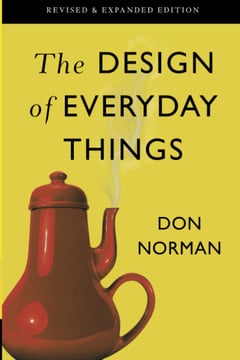
One of the world's great designers shares his vision of "the fundamental principles of great and meaningful design", that's "even more relevant today than it was when first published" (Tim Brown, CEO, IDEO). Even the smartest among us can feel inept as we fail to figure out which light switch or ov…
Recommended by the experts and mentors at MentorCruise.

The User Experience Team of One prescribes a range of approaches that have big impact and take less time and fewer resources than the standard lineup of UX deliverables. Whether you want to cross over into user experience or you're a seasoned practitioner trying to drag your organization forward, t…
Recommended by the experts and mentors at MentorCruise.
Learn the psychological constrictions of attention, perception, memory, disposition, motivation, and social influence that determine whether customers will be receptive to your digital innovations. Bottlenecks: Aligning UX Design with User Psychology fills a need for entrepreneurs, designers, and m…
Recommended by the experts and mentors at MentorCruise.
Build Better Products is a hands-on, step-by-step guide that helps teams incorporate strategy, empathy, design, and analytics into their development process. You’ll learn to develop products and features that improve your business’s bottom line while dramatically improving customer experience.
Recommended by the experts and mentors at MentorCruise.
In this completely updated and revised edition of Designing with the Mind in Mind, Jeff Johnson provides you with just enough background in perceptual and cognitive psychology that user interface (UI) design guidelines make intuitive sense rather than being just a list or rules to follow. Early UI …
Recommended by the experts and mentors at MentorCruise.
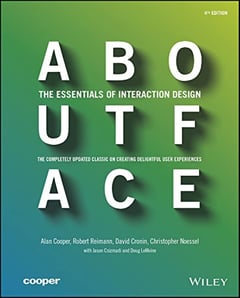
About Face: The Essentials of Interaction Design, Fourth Edition is the latest update to the book that shaped and evolved the landscape of interaction design. This comprehensive guide takes the worldwide shift to smartphones and tablets into account. New information includes discussions on mobile a…
Recommended by the experts and mentors at MentorCruise.
Get feedback on what you read from someone who does this for a living
These books are not required for you to learn UX Design, but they are highly recommended for you to deepen your knowledge.
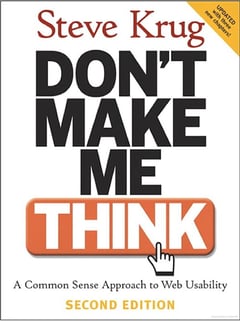
A classic intro to web usability that explains how to make sites and interfaces easy to understand and easy to use. It is short, practical, and full of clear examples, so it is a great pick for anyone learning UX design or wanting a solid foundation in user-centered thinking.
Recommended by the experts and mentors at MentorCruise.
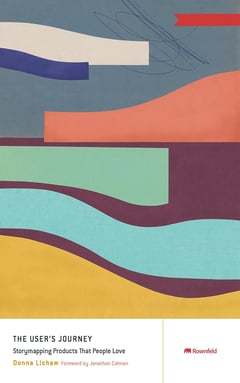
Like a good story, successful design is a series of engaging moments structured over time. The User’s Journey will show you how, when, and why to use narrative structure, technique, and principles to ideate, craft, and test a cohesive vision for an engaging outcome. See how a “story first” approach…
Recommended by the experts and mentors at MentorCruise.
Smart organizations recognize that Web design is more than just creating clean code and sharp graphics. A site that really works fulfills your strategic objectives while meeting the needs of your users. Even the best content and the most sophisticated technology won't help you balance those goals w…
Recommended by the experts and mentors at MentorCruise.
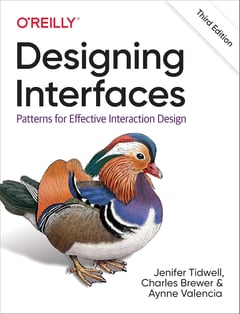
Designing good application interfaces isnâ??t easy now that companies need to create compelling, seamless user experiences across an exploding number of channels, screens, and contexts. In this updated third edition, youâ??ll learn how to navigate through the maze of design options. By capturing UI…
Recommended by the experts and mentors at MentorCruise.
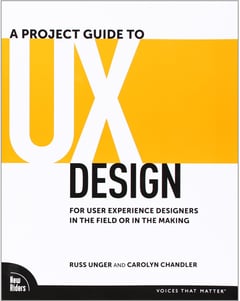
“If you are a young designer entering or contemplating entering the UX field this is a canonical book. If you are an organization that really needs to start grokking UX this book is also for you. " -- Chris Bernard, User Experience Evangelist, Microsoft User experience design is the discipline of c…
Recommended by the experts and mentors at MentorCruise.
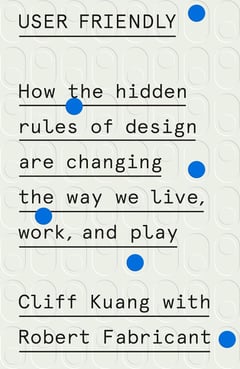
In User Friendly, Cliff Kuang and Robert Fabricant reveal the untold story of a paradigm that quietly rules our modern lives: the assumption that machines should anticipate what we need. Spanning over a century of sweeping changes, from women’s rights to the Great Depression to World War II to the …
Recommended by the experts and mentors at MentorCruise.
This list is curated by MentorCruise and can include Amazon affiliate links. Have any other suggestions? Add here.
A UX Design book that helped someone three years in won't necessarily help someone two months in. Pick by where you are, not by what's trending.
Identify the specific UX Design problem in front of you this month – a stuck project, a missing fundamental, a decision you keep second-guessing. Then pick the book that maps to it. Books read in response to a real question stick. Books read in general don't.
If a UX Design book has been on mentor recommendation lists for five years, it survived the parts of UX Design that actually changed. Newer titles are useful for tools and tactics. Older ones tend to be where the durable thinking lives.
Foundational reads if you're new to UX Design. Applied case studies and patterns once you've shipped real work. Frameworks for leading teams once you're managing other UX Design people. The same book recommended at the wrong stage just becomes noise.
The hardest part of getting good at UX Design isn't finding the right book – it's translating what you read into how you actually work. Most readers forget around 80% of what they read within a few weeks. The ones who don't are the ones who picked one specific idea per book and tried it on real work the next day.
That's where a UX Design mentor closes the loop. A book can give you a framework. A mentor reads your real work and tells you where the gap is between what you think you're doing and what you're actually doing – the thing a book, by design, can't do.
A UX Design book gives you the framework. But most readers forget around 80% of what they read within a few weeks.
A mentor closes the loop – they read your real work and tell you where the gap is between what you think you're doing and what you're actually doing.
Common questions about choosing and learning from UX Design books in 2026.
The best UX Design books for beginners cover the fundamentals before specialization. Start with the Fundamentals section on this page – those are the titles mentors most often hand to people who are new to UX Design. Once you've worked through one or two, the Additional Reading and Specializations sections will deepen your knowledge.
Two or three carefully chosen UX Design books, read closely and applied as you go, will take you further than a stack of ten skimmed. We recommend one fundamentals book to build your mental model, one practical book to ground it in real work, and one advanced book once you've shipped something.
Yes. Tools and frameworks change quickly, but the underlying principles of UX Design – the mental models, trade-offs and judgement calls – move much more slowly. The books on this list focus on durable thinking, not version numbers, which is why mentors still recommend them in 2026.
You can get a long way on your own with the right books and projects, but most people hit a ceiling where a book can't tell you whether the choice you're about to make is reasonable for your specific situation. That's where a UX Design mentor speeds things up – they look at your real work and tell you what a book can't.
Every book on this page is recommended by working UX Design professionals on MentorCruise or curated by our editorial team from titles mentors consistently bring up. We re-check the list periodically and rotate in newer titles when the field moves – the 2026 edition reflects that.
Most UX Design books cost $15 to $30 new, $10 to $15 as ebooks, and nothing if you borrow them from a local library. If you're working through several titles, a library hold list is the cheapest way to triage which ones are worth buying. The cost ceiling for a year of reading is well under the cost of one industry conference.
Three reasons usually: passive reading without notes, no system for picking one idea to actually try at work, and no one giving feedback on whether the attempt worked. Books on their own are an input. Without a practice loop and someone checking your work, what you read fades within weeks – which is what working with a UX Design mentor fixes.
Four to six UX Design books read closely and applied to your real work will outperform twenty skimmed. Career growth comes from the application, not the page count. Pair each book with one concrete experiment at work and one conversation with someone who already knows the material.


Most of what you read fades within weeks. A UX Design mentor looks at your real work and tells you what a book can't.
Talk to a UX Design mentorThere is no better source of accountability and motivation than having a personal mentor. What used to be impossible to find is now just two clicks away! All mentors are vetted & hands-on!
We've already delivered 1-on-1 mentorship to thousands of students, professionals, managers and executives. Even better, they've left an average rating of 4.9 out of 5 for our mentors.
Find a UX Design mentor